


As International Women’s Day highlights women’s achievements worldwide, female adventurers continue to redefine wilderness exploration. Three explorers describe what drives them, how they challenge conventions, and why fear in the wild can turn into moments of happiness.
Being outdoors means feeling freedom: the crisp air on an autumn morning when you crawl out of your sleeping bag, the sound of wind in the trees, light shifting across the mountains, the shimmer of a lake. In the wilderness, people can try new things and build confidence. At the same time, it presents challenges: facing a storm, enduring darkness, or spending the first night alone in a tent.
Those who overcome these experiences know that wilderness does not only offer freedom – it also provides a strength that lasts long beyond the moment.
The desire to discover, challenge oneself, and expand personal limits has likely always existed. For a long time, however, men dominated the public image of adventure. Names such as Roald Amundsen, who became the first person to reach the South Pole in 1911, Thor Heyerdahl with the Kon-Tiki expedition in 1947, and Fridtjof Nansen, who crossed Greenland on skis.
Women also made history, including English travel writer Isabella Bird in the nineteenth century. But their achievements rarely received the same public attention. As a result, the image of adventure remained largely one-sided and shaped early outdoor culture.
From male norm to diversity in the outdoor industry
For decades, it was not only the stories that were one-sided – the equipment was as well. Outdoor gear was primarily designed for men. Backpacks were too long, sleeping bags too wide, and climbing harnesses uncomfortable for many women.
During the 1970s and 1980s, the women’s movement strengthened women’s participation in outdoor activities. More women began to take their place in nature. Role models such as Arlene Blum, who led an all-female expedition to Annapurna in 1978, and Norwegian explorer Monica Kristensen, who led polar expeditions in the 1980s, gained international attention and demonstrated that adventure is not a male privilege.
As women’s presence in mountains, forests, and oceans increased, demand for suitable equipment also grew. Beginning in the 2000s, brands such as Houdini Sportswear, Deuter, Osprey, and Vaude introduced women-specific collections and equipment for the first time.
These included shorter back lengths, narrower shoulder straps, and sleeping bags designed to provide additional warmth in the hip and foot areas. Today, a wide range of products is available that improves comfort and safety.
Topics that were rarely discussed in the past are now part of trip planning, including menstruation and hygiene during expeditions. Various practical solutions are now available – from menstrual cups and menstrual underwear to lightweight hygiene kits designed for outdoor travel.
These options can make longer adventures easier and more manageable.
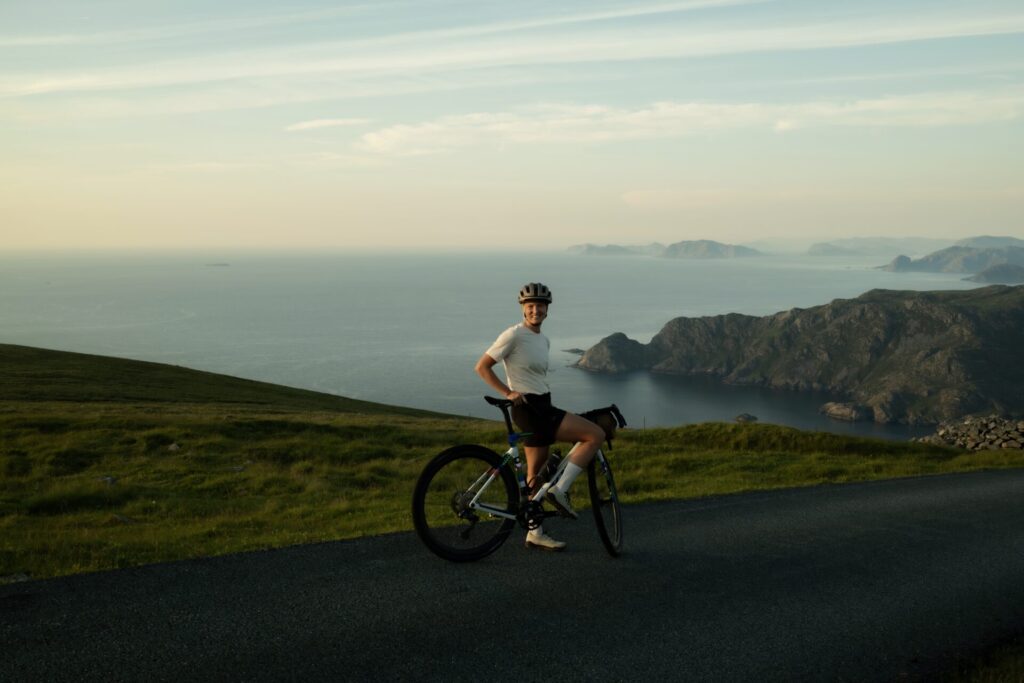
Henna Palosaari (photo Adam Gairns)
Women traveling alone in the wilderness
Although female adventurers are more visible today than a few decades ago, women who travel alone in the wilderness often still encounter surprise.
“I often get asked: ‘Do you really travel completely alone?’” says Finnish surfer, snowboarder, and gravel cyclist Henna Palosaari, who has already completed several solo journeys.
“This outdated idea that women should not travel alone is somehow difficult to shake. But that’s exactly why I enjoy breaking those boundaries.”
Henna observes differences in how people approach risk.
“The biggest difference I notice is in extreme sports such as mountain biking and freeriding. Men often seem less hesitant, while women sometimes need more encouragement. I believe this has a lot to do with upbringing. Boys are often encouraged to take risks, while girls tend to be protected more. Fortunately, that is changing.”
“The younger generation has grown up being encouraged to do whatever they want, regardless of gender. I hope this change continues to accelerate in the coming years – and that we will see real equality for women in outdoor sports and extreme sports. Seeing other women achieve great things shows you what you are capable of yourself.”
Henna has experienced firsthand how empowering outdoor experiences can be. Her 4,800-kilometer cycling journey across Finland left a lasting impression.
“When I realized how far I had come on my own, it strengthened me enormously. For me, being alone in nature and experiencing adventure was incredibly enriching. It helped me trust myself and my body and recognize what I am capable of.”
Fear, preparation, and confidence outdoors
Henna often feels safest far out in nature – far away from cities and people.
“I perceive the dangers of nature as less threatening than those in urban environments,” she says.
One of her most frightening moments occurred while bivouacking in Portugal.
“I had been riding late into the night and set up camp in the dark. Then I started thinking about everything I hadn’t checked – like whether there might be scorpions, snakes, or other dangerous animals. When you bivouac, you’re less protected than in a tent, so I barely slept that night.”
“Early in the morning I woke up to a fox playing with my water bottle next to my bivouac. I knew it wouldn’t harm me, but I was still a bit frightened and couldn’t fall asleep again.”
Despite such moments, Henna keeps returning to the outdoors.
“Fear is often something we create in our own minds. After a few nights, you realize that there is usually nothing to be afraid of. The important thing is to be prepared – for bad weather, injuries, or navigation problems. Then you can explore freely and safely.”
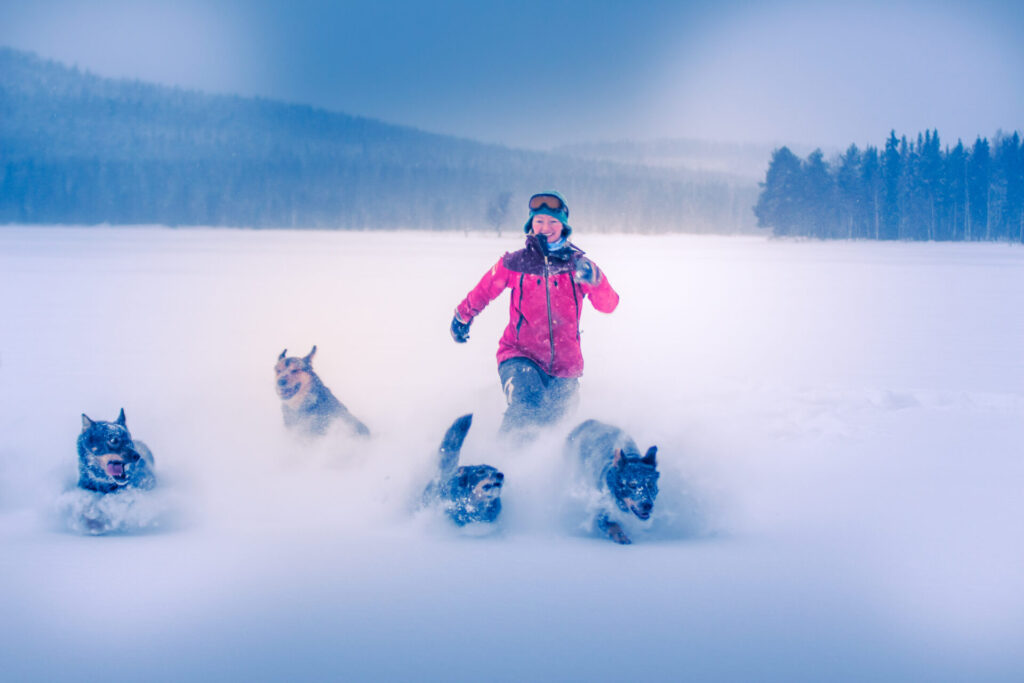
(Photo: Katharina Koch-Hartke)
Dogsled expeditions in northern Scandinavia
Katharina Koch-Hartke comes from Germany and has run a dogsledding company in northern Sweden for years. She also recognizes the mix of skepticism and admiration when she explains that she has traveled thousands of kilometers alone with her dog team across Norway, Sweden, and Finland.
“The reactions I get range from surprise and curiosity to genuine admiration – roughly in that order,” she says.
“Lower weight and a smaller body can sometimes be a disadvantage in dogsledding. I had to practice preparing the training trails for my sled dogs in deep snow. But with technique and a slightly adapted driving style, it works very well.”
Katharina describes herself as cautious, yet constantly seeking new challenges.
“I try to be prepared for possible risks. I think it’s more a question of personality than a difference between men and women.”
“During my tours, there are often moments when I reach my limits and feel weak. In those moments you have to face the fear and continue. Or take a step back, prepare better, and try again until it works.”
In competitions she previously participated in, differences also disappeared.
“Everyone starts in the same class. In the end, it’s only what you and your dogs achieve that counts.”
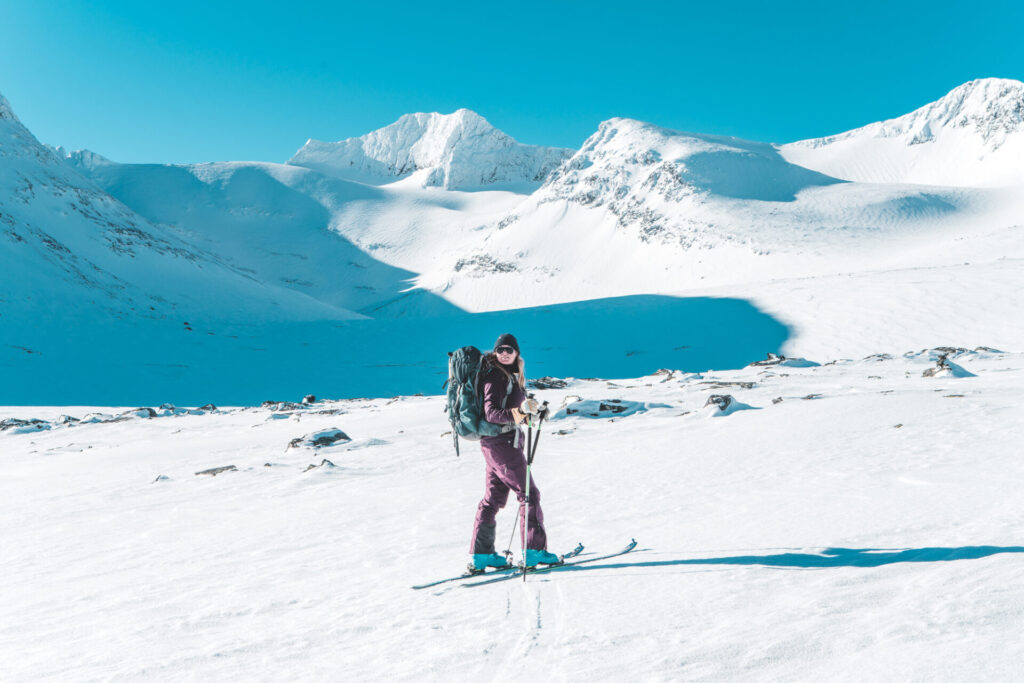
(Photo: Linda Akerberg)
Learning independence in the wilderness
Swedish adventurer Linda Åkerberg considers it strange that people ask why a woman would choose to travel alone in the wilderness.
“When I tell people that I hiked the 4,265-kilometer Pacific Crest Trail from Mexico to Canada alone, they often ask if I really did it by myself. I never thought it was strange to be alone as a woman. In nature, storms, rain, and snow affect everyone equally – nature does not care whether you are a man or a woman,” she says.
Her research for a book project, however, revealed differences in perceived risks outdoors.
“In an outdoor Facebook group I asked people what they fear most when they are alone in the wilderness. Almost all women mentioned encountering an unknown man as the greatest danger, while most men mentioned thunderstorms, storms, or getting lost.”
“Many men were surprised and saddened that so many women were afraid of them.”
Like Henna, Linda says she generally feels safe in nature.
“I actually find it more exhausting to hike on trails closer to civilization,” she says.
“If you are not afraid to walk through a city, you should not be afraid to walk through nature either. But the best remedy for this worry is positive personal experience.”
Step by step toward solo wilderness travel
Looking back, Linda says the visibility of female adventurers has increased significantly.
“Ten years ago, when there was far less social media, it was much harder to make female outdoor adventurers visible. Today I follow many women who undertake inspiring journeys. There is a lot of mutual support.”
This visibility is also reflected outdoors, where more women are setting out on their own trips.
“I think it can be incredibly liberating, especially for women, to step away from everyday norms. When I am hiking, I feel much more equal.”
Linda has organized several wilderness trips herself – both mixed groups and trips exclusively for women.
“If you are afraid to travel alone, start by traveling with someone else or join a group trip,” she says.
“In mixed groups I often see men automatically taking on tasks such as chopping wood or lighting a fire. In women-only groups, everyone takes responsibility, everyone learns, and everyone grows.”
“Eventually there comes a moment when you realize: I can do this. That is when you set off on your own.”
Lead image: Henna Palosaari (photo by Adam Gairns)

Sorry, the comment form is closed at this time.