


Andrew Denton has led the Outdoor Industries Association since 2012 and now chairs the ISPO Impact Foundation, which funds grassroots projects in nature conservation and physical activity. Ahead of the foundation’s first awards ceremony, he talks about €1 million in annual funding, the value of meeting in person and what to look for at ISPO.
You’ve led the Outdoor Industries Association UK since 2012, working to “Get Britain Active Outdoors.” What personally drives you in that role, and what keeps you invested in the outdoor industry at large?
I’ve been in the outdoor industry for more than 40 years, as an instructor, a rep, then a brand owner, a trade association CEO, co-founder of a climbing wall company and simply as someone who has spent a huge part of my life climbing, skiing, running and being outside.
So for me, this has never just been about selling jackets or tents. The outdoor industry sits at the intersection of some really important things for me personally: health, well-being, access to nature, community, environmental responsibility and economic growth.
What drives me is the fairly simple belief that being active outdoors makes people’s lives better. It made my life better, and I’ve seen it do the same for thousands of other people.
And I think my varied experience makes me unusually well placed to front that call to action. I may not be the best at anything – there are far more experienced people in the sector in all these fields – but the eclectic nature of my passions and experience means I can speak with absolute certainty about the broad benefits, and the essential nature, of getting people outdoors.
This is what keeps me invested in the industry. And despite toying with retirement multiple times over the decades, I never seem to get there – I just love working in the sector too much!
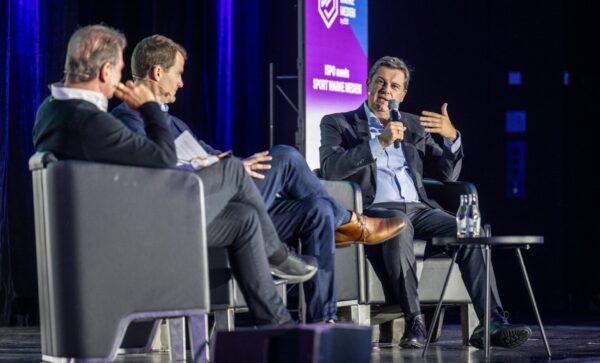
That focus on getting people active is also at the heart of the new ISPO Impact Foundation, where you’ll be speaking at the awards ceremony for its first grantees. With €1 million in annual funding for grassroots projects in nature conservation and physical activity, what do you see as the significance of this initiative for the industry?
I should start this answer with a shout-out to ISPO for the massive donation. They don’t have to do this; it’s one of the largest single donations to our industry I can remember. When Mike Seaman, the Raccoon Media CEO, asked me to chair the Impact Foundation, it was a dream role for me. To be able to create the infrastructure that gives away so much to so many great projects – incredible.
That said, to answer the question: I think the significance is that it moves us beyond just talking about impact and actually starts funding it.
There are thousands of extraordinary grassroots organizations around the world getting people active, protecting landscapes, improving access and using sport and outdoor activity to change lives. Most of them are not looking for enormous amounts of money. They need relatively modest, practical funding that allows them to get on with the work.
For the first round we received nearly 500 applications from almost 80 countries, which tells you something about the scale of both the need and the opportunity.
The ISPO Impact Foundation creates a direct connection between the sporting goods and outdoor industry and those projects on the ground. It also changes the relationship between the industry and the people we ultimately serve. Instead of only asking, “How do we sell more product?” we are also asking, “How do we help create the conditions in which more people can live active outdoor lives?”
That feels like a very healthy question for the industry to be asking.
What do you think happens when the industry gathers in one place like ISPO that can’t happen anywhere else? Where and when have you seen that lead to change on sustainability?
There is still something slightly magical about getting people physically into the same room. I remember during lockdown, sitting at home writing a daily outdoor industry newsletter – it’s simply not the same. We can all do Teams calls and Zoom calls and exchange endless emails, but industries are ultimately built on relationships, trust and accidental conversations. The conversation you didn’t plan to have in a corridor or over coffee is often the one that actually leads somewhere.
A lot of my work involves lobbying government. I can’t ring up DCMS and ask to bump into the minister for an informal chat about the outdoors. I’ve got to be in Central Lobby or at the parliamentary reception, waiting for the right moment to mention the outdoors. This work is done gradually, bit by bit.
Sustainability is a particularly good example of this in action. 10 or 15 years ago, many of the most important conversations were happening between a relatively small number of committed individuals inside companies. When those people came together and compared what they were doing – with single-use plastics, repair, climate impact and more – sustainability stopped being a niche issue and became something the whole industry had to engage with.
The industry needs these moments where it can look up from the day-to-day and ask, “What are the big things we need to solve together?” Sustainability is one of those. Participation is another. Neither of them is going to be solved by one brand acting alone.
Beyond the Impact Foundation stage, what other events and trends will you be keeping an eye on at ISPO? What are your personal “don’t miss” recommendations, particularly around sustainability and participation?
I’ll be looking at anything that connects three things: innovation, participation and genuine impact.
On sustainability, I’m increasingly interested in the shift from broad ambition to practical delivery. We’ve had years of targets and commitments. The interesting question now is: what is actually working? And who is clearly addressing the application of the standards and legislation coming down the line? Sustainability needs to be baked into our R&D and supply chains in a simple, deliverable manner.
Only this week I spoke to a major international brand that had had the wrong information on POS for over a year, simply because the legislation was so confusing – yet no one noticed: customer, authority, distributor or retailer. What use is that?
So I’ll be looking at repair, circularity, product longevity, materials innovation and especially the growing regulatory and compliance agenda. Sustainability is no longer just a CSR conversation – it is becoming a core commercial issue. I’m also looking for ideas that remove barriers, whether that’s affordability, access, disability, gender, ethnicity, confidence or simply the fact that a lot of people still don’t feel the outdoors is “for them.” Some of the most interesting work in our sector now is happening where product innovation meets social innovation.
My personal “don’t miss” recommendation would be to spend less time only looking at the big stands and more time talking to the smaller organizations, start-ups, charities and people working around the edges of the industry. That is often where the next big idea starts. And I’d make time for the conversations around the future of participation. We have an industry whose long-term success depends on more people wanting to be active outdoors. So anything that helps answer the question, “How do we get the next generation outside?” is worth paying attention to.
Because ultimately that is the common thread: healthier people, healthier communities, healthier businesses and, hopefully, a healthier planet.
About the Outdoor Industries Association
The Outdoor Industries Association (OIA) is a nonprofit membership organization for the UK outdoor recreation sector. It represents brands, retailers, NGOs and activity providers, with a mission to engage, represent and promote the outdoor recreation industries.



Sorry, the comment form is closed at this time.