


Oslo-based outdoor brand Northern Playground has become one of a handful of companies to give nature a vote in the boardroom. Founder and CEO Jo Egil Tobiassen explains the thinking behind the move.
It has long been said that conscious consumers can vote with their wallets and take their business elsewhere. Inside the company, however, votes tend to land in the same place: profit maximization, often at the expense of nature. Efforts to change this equation have taken different forms. The Rights of Nature movement grants legal rights to ecosystems, with human proxies acting on their behalf. B Corp certification takes a corporate route, requiring companies to amend their statutes to account for people and the environment alongside shareholders. A small number of companies have now taken these ideas a step further by giving nature a vote in the boardroom itself, starting with UK body care brand Faith in Nature in 2022.
On June 3, 2026, Northern Playground joined them, voting at its general meeting to give nature a full seat on its board. Here, nature is to be represented by a proxy with the same rights and duties as the other board members. This proxy speaks and votes on its behalf on all nature-related matters, from the choice of materials and production sites to the business model itself. While nature may not have a veto, the board must justify any decision that overrides its vote and present an annual nature report to the general meeting.
Suston reached out to CEO Jo Tobiassen to learn more.
SUSTON: Many companies say they want to have a positive impact on nature. Relinquishing power to nature, however, is a step few have dared. What was the thinking behind giving nature a formal seat on the board?
“If we actually mean it, that the company should contribute positively to nature and that it isn’t just marketing, then nature should be present where the power lies. That’s why we want to give nature real influence in the company, even though nature isn’t a major owner. I really think nature should be part of the governance structure in every company that affects nature, and not just something the sustainability manager tinkers with.”
SUSTON: The decision was made in June. Has it changed how the board works so far?
“It’s too early to draw conclusions, but it’s already influencing how we work. We’re building nature considerations into board meetings and discussing an ambitious strategy for how the company can become even better. At the same time, it’s about more than our own value chain and emissions. The board also has to ask: How can we use our time, money and voice to influence policy, the industry and customers in a better direction?”
SUSTON: A board member representing nature might be expected to put the brakes on growth. Aren’t you worried it will ruin all the money-making fun?
“We were already pretty far from ‘money-making fun.’ Our statutes say that our purpose goes well beyond maximizing returns for the owners. At the same time, we don’t believe that nature considerations and growth are necessarily in conflict. Nature’s representative has also said that growth is fine, as long as it’s responsible and comes to a greater extent from circular business models, not just from producing and selling more and more new products.”
 Nature’s voice in the boardroom
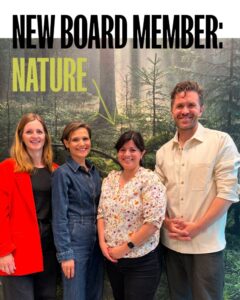 Nature’s voice in the boardroom
Joining as nature’s proxy on the board is Karoline Andaur, secretary general of WWF Norway. In a statement following her appointment, she is clear-eyed about both the challenge and the opportunity ahead:
“Even though Northern Playground is a company that already goes against the grain, situations may arise where nature considerations end up taking a back seat. Then it is my responsibility to bring nature’s perspective into the boardroom in a way that actually influences decisions.
“This is incredibly exciting groundbreaking work that I hope can have ripple effects in other boardrooms.”
About Northern Playground
Founded in 2014, Oslo-based Northern Playground designs outdoor clothing built for longevity rather than volume. The company releases no seasonal collections and offers no discounts, and its Use More service includes maintenance support and in-house repairs. It also sets aside NOK 15 per online sale as a self-imposed environmental tax for saving and repairing clothes. Its main manufacturer is Utenos Trikotažas in Lithuania, which works in line with Greenpeace’s Global Textile Procurement Standard, according to Northern Playground.
Lead Photo: Erik Abel



Sorry, the comment form is closed at this time.