


Jonas Schneider argues that the brands doing most on their own footprint are often the first to find its limits – and that the next lever sits outside the company.
Over the past decade the outdoor industry has taken its own footprint seriously. Decarbonized supply chains. Phased out PFAS. Moved to recycled materials. Built repair and resale programs. Set science-based targets. The work is real and it is hard, and this magazine has documented much of it.
But across the sector, absolute emissions are still rising. The brands doing the most tend to show it most clearly in their own impact reports: emissions per euro of revenue falling sharply, total emissions not. Growth often outpaces efficiency.
After a summer of heatwaves, droughts and wildfires across Europe, the people doing this work are left with an uncomfortable question: what more can a single company actually do?
This is not a failure of effort
It is the boundary of what any company can change inside its own walls. A brand controls its materials, its factories, its logistics. It does not control the rules that shape the market it operates in.
Take the largest source of emissions across outdoor sport as a whole: not making the gear, but getting people to the mountains, trails and coasts where they use it. Transport is Europe’s biggest source of emissions and the only major sector still above 1990 levels. No company can change that alone.
Why we built Brand Advocacy Day
Fossil fuels, aviation and automotive are always in the rooms where European rules get written. The outdoor sector represents millions of people whose lives and livelihoods depend on stable seasons, yet is almost never there, partly because so much of its energy has gone, rightly, into getting its own house in order.
That gap is why we started Brand Advocacy Day. The first edition took place in Amsterdam a year ago. This September we ran the second, in Brussels and inside the European Parliament, with outdoor brands of every size in the room. For the same reason, POW Europe is moving its headquarters to Brussels, and the Brand Advocacy Day also opened its new office there.
A rare chance to change how Europe travels
The EU is about to decide rules that will shape how Europeans travel for the next decade. The Passenger Package, on travelers’ rights, and the upcoming VAT Package for travel and tourism, on how travel is taxed, present a rare opportunity to make Europe’s transport system more sustainable. The Commission’s VAT proposal is expected before the end of the year.
As things stand, cross-border flights in the EU are exempt from VAT, and that exemption is mandatory under EU law. Rail gets the opposite treatment: international train tickets are still taxed in five member states, and most countries tax domestic rail too.
The imbalance is stark. In 2024 alone, aviation’s mandatory exemption cost EU governments €29 billion in lost tax revenue. Zero-rating international rail across the entire EU would cost around €110 million, a rounding error by comparison.
At Brand Advocacy Day, POW Europe presented its position paper on the VAT package, and outdoor brands are already signing it. It does not ask for a new tax. It asks Europe to fix that imbalance, making the cleaner choice the cheaper one. Together, the outdoor sector can help tackle Europe’s largest source of emissions.
POW Europe is inviting outdoor brands to sign before the Commission publishes its proposal, so that companies that depend on the outdoors are heard where decisions are made. Add your brand’s signature here, or email Natasha Kalauz, CEO of POW Europe.
About Jonas Schneider
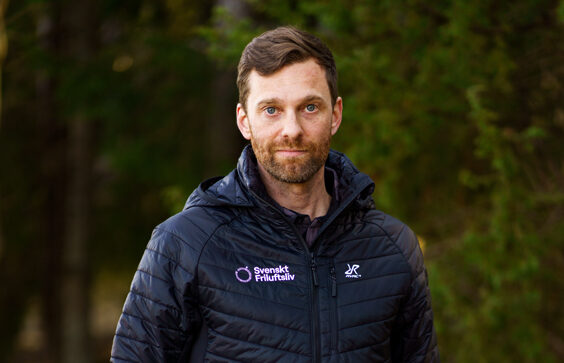
Jonas Schneider founded Brand Advocacy Day as Executive Director of POW Europe and led the first two editions, in Amsterdam and Brussels. He now advises mission-driven organizations through his own practice, Chilliwep. Based in Barcelona, he is happiest on a splitboard or in the surf.
Lead photo: Teddy Houtkamp






Sorry, the comment form is closed at this time.