


Suston’s editor-in-chief Gabriel Arthur visits Sweden’s largest outdoor festival, meets participants who are usually invisible in outdoor life, and returns home with insights on inclusive outdoor recreation.

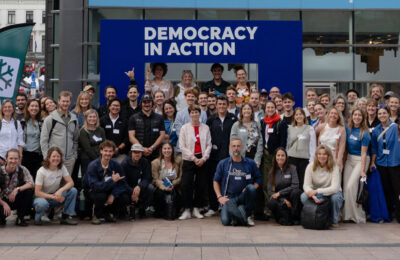
In late May, Outdoor Festival Stockholm took place – a public weekend event with around sixty exhibitors and about 8,000 visitors. Tipis, food trucks, two stages and hands-on stations for everything from cooking to leatherwork. The festival was held on Södra Djurgården, a scenic island in central Stockholm. With old oaks, green meadows and a canal running alongside, it felt like a genuine outdoor area, despite being just a 20-minute bike ride from downtown.
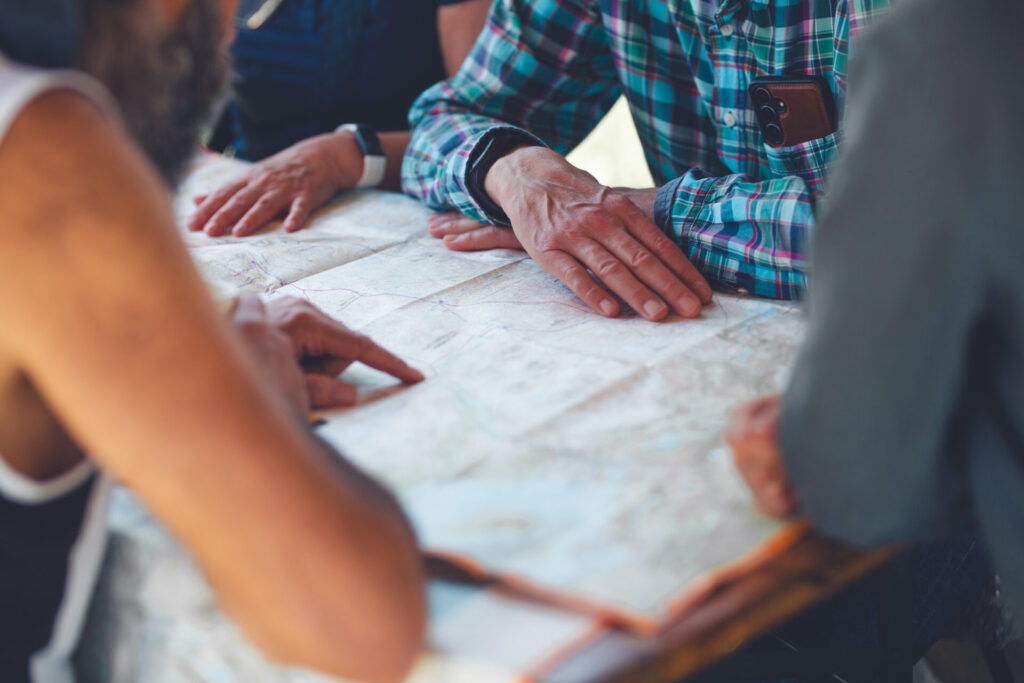
The outdoor community needs more meeting places. (Photo: Josefin Ramn)
Over the twenty-five to thirty years I’ve written about outdoor life and nature, this world has broadened in a good way. When I started, the focus was more on extreme adventures and grueling expeditions. Perhaps it also mattered that my own focus leaned that way back then. Marketing showed climbers on Himalayan 8,000-meter peaks and other expeditions.
Extreme adventures still exist – but alongside them, a more down-to-earth outdoor movement has taken a bigger place. A walk with friends in the nearest patch of forest now also counts as outdoor life. The health benefits get more attention, as do the social aspects. Conservation has also become a natural part of outdoor life.
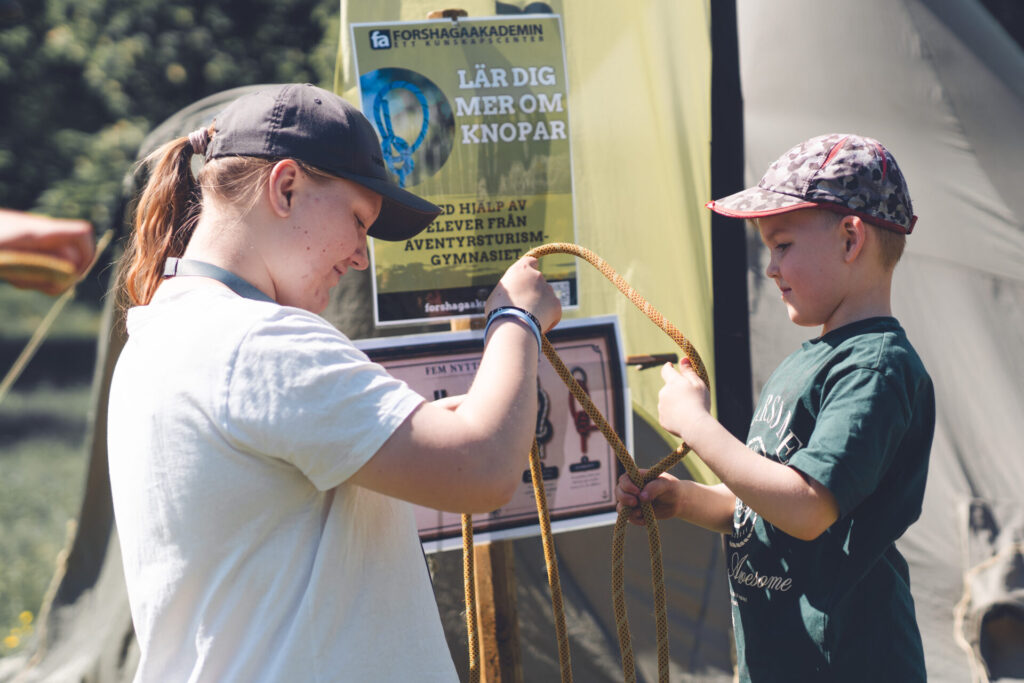
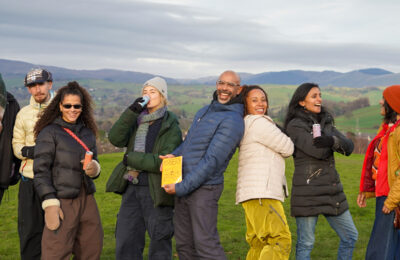
Activities and simple challenges for all ages. (Photo: Josefin Ramn)
Other kinds of adventurers
This shows at the outdoor festival, which has an informal motto that everyone should be included. The range is inspiring – there are talks on alpinism alongside a group of high school students selling mini emergency cook stoves made from recycled materials. Scouts, travel companies and outdoor brands are among the exhibitors.
But it’s also clear that the road to an equitable outdoor life is still long. I get an important reality check when I talk to Anders Andrae, founder of the project Den långa vandringen (The Long Hike). Anders has lived with spina bifida since birth and has always used a wheelchair. That hasn’t stopped him from doing what he loves most – being out in nature.
Den långa vandringen is about people with disabilities setting out on a 20-kilometer hike – or longer. Anders himself has, for example, wheeled 120 kilometers along the St. Olav Trail in the Swedish mountains. The festival also features exhibitors of off-road electric wheelchairs and a sailing project for people with disabilities. It strikes me how unusual this is.
Over my twenty-five to thirty years, I have never before seen people with disabilities in outdoor companies’ marketing. Those of us in media sometimes write about the topic, but very rarely, and then the story is about exactly that. I can’t recall ever reading a feature where a person in a wheelchair was included simply as one of the group – as the entirely natural thing that disability actually is.

Skota Hem – an initiative that makes it possible for people with mobility impairments to sail. (Photo: Josefin Ramn)
Shared joy is double joy
“Do I have some responsibility myself?” I wonder as I bike home from the festival.
Out in nature, I belong to a privileged group. Male, white, middle class and without major physical challenges. In such a group, it’s easy to assume everyone else has it more or less the same. Of course that isn’t the case – I remember, for instance, listening to Swedish adventurer Linda Åkerberg talk about her long-distance hikes.
“Men who hike solo may be afraid of encountering predators. Women who hike solo are afraid of encountering dangerous men.”
Should I contribute more? Or is it up to those who are underrepresented to take up more space, overcome various obstacles and get out there?
“Maybe responsibility is the wrong word?” I wonder further.
Isn’t it more about generosity and sharing? And, at the same time, about getting to experience encounters with people who have different experiences and circumstances – people who can give just as much back?
Being able to be out in nature as easily and freely as I have been able to is a gift. It’s a gift that doesn’t shrink when I share it. On the contrary, it only grows.
This generous spirit defined Outdoor Festival Stockholm – and it should spread.
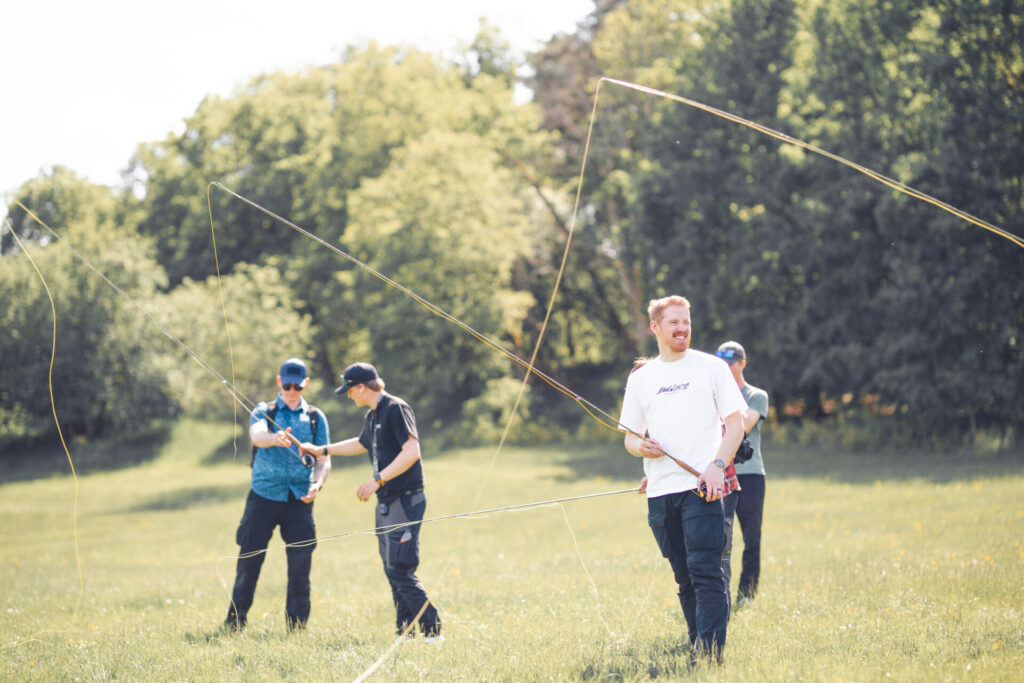
Fly fishing on dry land – a good entry point. (Photo: Josefin Ramn)
About Outdoor Festival Sthlm
This year’s festival was held on Södra Djurgården in Stockholm. Around sixty exhibitors and about 8,000 visitors attended on May 23 and 24. Utsidan was the festival’s media partner.
Photos: Josefin Ramn



Sorry, the comment form is closed at this time.