


Outdoor apparel brands have made major strides toward more sustainable production in recent years, but what about climbing gear? We take a deep dive into the environmental impact of climbing equipment with Gini Illing, CSR, from Edelrid.
Edelrid has been a sustainability forerunner within the hard goods sector for a while now. What were some of the company’s early “firsts” in this space, and how has that focus evolved since?
One of the earliest milestones came in 2009, when Edelrid introduced one of the world’s first bluesign – certified climbing ropes. Released at the same time as Mammut’s bluesign rope, it marked the beginning of a new era of more responsible rope production. In 2016, we followed with the world’s first bluesign – certified climbing harness, demonstrating that even highly complex personal protective equipment (PPE) can be manufactured to demanding environmental standards.
For Edelrid, innovation starts by questioning established approaches to product design. The same mindset drives our work on performance, safety and environmental responsibility. The Steel Story is a good example. Instead of simply making carabiners lighter, Edelrid asked how they could make them last longer. By combining lightweight aluminium with strategically placed steel inserts in high – abrasion areas, we intend to significantly extended their service life. The same mindset led to the world’s first PFAS – free dry – treated climbing rope, proving that excellent water repellency can be achieved without relying on persistent fluorinated chemicals.
Over the last few years, I’ve seen that focus shift from asking “Can we do it?” to “Where can we make the biggest difference?”. The engineering mindset hasn’t changed – only the questions have become more specific. Today, we rely much more on better data—from company – wide greenhouse gas accounting to product life cycle assessments—to pinpoint where our environmental impacts occur and where innovation can have the greatest effect. So, whether on the wall or in product development, better understanding is the key to finding better solutions.
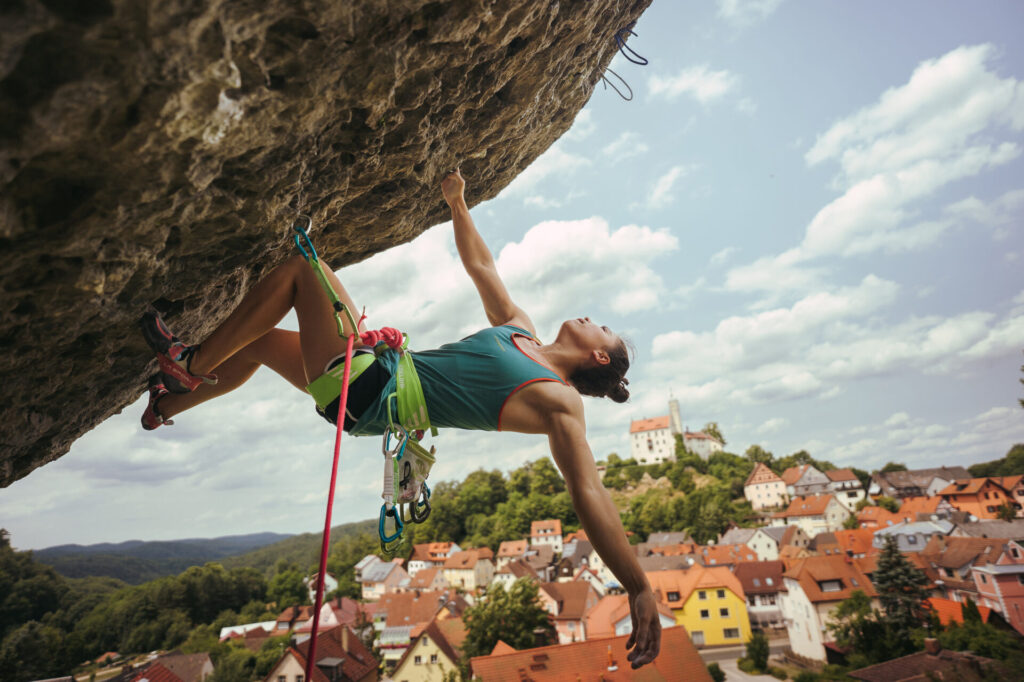
(Photo: Hannes Huch / Edelrid)
Climbing gear is unique in that it must balance between sustainability and safety. Has that tension created communication challenges with climbers?
Absolutely. It’s probably one of the questions I’m asked most often. The challenge isn’t whether environmental responsibility and PPE can go hand in hand—we’ve shown that it can. The real challenge is changing perception.
You recently completed a cradle – to – grave LCA for several climbing harness models. What were the key findings? What suspicions were confirmed, and what surprised you?
The LCA itself was carried out by Fenja Köchl (DAV Exped – Kader team member with a huge passion for nature and to push boundaries—both in climbing and in finding ways to reduce environmental impacts) as part of her Master’s thesis at Edelrid, and I had the opportunity to supervise the project.
One finding confirmed what I expected: materials still call the shots. That isn’t exactly revolutionary—we’ve known for years that most environmental impacts in textiles occur long before the final product is assembled. For climbing harnesses, it’s even more pronounced. Around 70% of its footprint comes from what we broadly call the materials stage – everything from raw material extraction, polymer production, fiber spinning and weaving.
What I found most interesting is the actual role of recycled materials. One of the main objectives of the study was to quantify their benefit. Replacing virgin textile materials with recycled alternatives wherever technically feasible reduced the footprint by around 14–16%, depending on the harness model. That’s a significant improvement – but lower than I had expected. To me, it highlighted that how materials are produced can be just as important as which materials we choose.
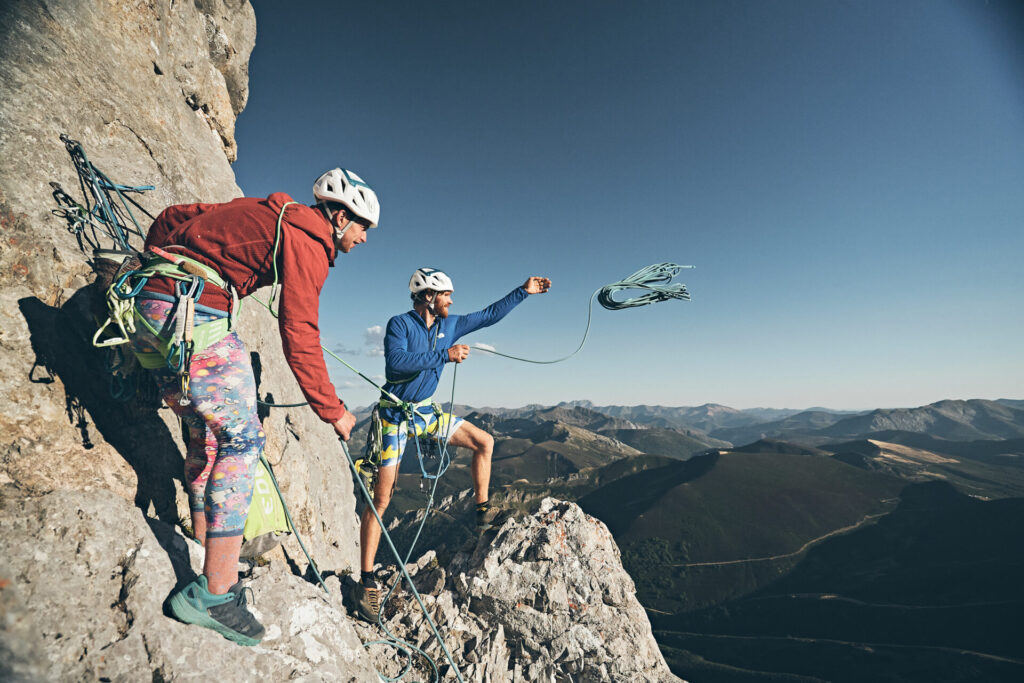
(Photo: Christoph Muster / Edelrid)
Edelrid also uses recycled and biobased material to reduce raw material environmental impact. What is your current uptake, and how much further can this take you in reducing material impact?
At Edelrid, we already use both mechanically and chemically recycled polyamide as well as materials from other feedstocks, such as castor – oil in the birdlime.
Mechanical recycling requires clean, homogeneous material streams, which is why it typically uses post – industrial production waste such as leftovers from the Kern – yarn. The material is mechanically reprocessed into new yarn with relatively little additional processing, making it one of the lowest – impact material options currently available.
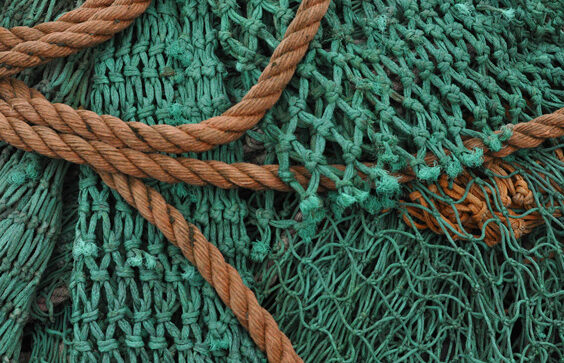
Chemical recycling is much more flexible regarding the feedstock. It can process more complex polyamide waste streams – including rope waste, discarded fishing nets or carpets – that would be difficult or yet impossible to recycle mechanically in a quality needed for rope production. The polymer is broken down into its original building blocks and polymerised again into virgin – quality polyamide. This makes it suitable for demanding PPE applications while also enabling the use of post – consumer waste. We already send our own rope production waste to a chemical recycler and receive chemically recycled polyamide back. While this is not yet a certified closed – loop system, it is an important step towards keeping valuable materials in circulation.
Alternative feedstocks, like biobased materials, follow a different strategy. Instead of using recycled material, they replace fossil raw materials with renewable ones. Our Birdlime 1R 9.8 mm rope, for example, is made from bio – based polyamide derived from castor oil. While this reduces dependence on fossil resources, our LCAs currently show that it has a higher overall environmental footprint than our recycled polyamide options, largely because agricultural production and the conversion into bio – based polyamide introduce additional environmental impacts. That said, we also expect the economic and environmental performance of bio – based polyamide to improve as these value chains mature.
The LCA shows most environmental impact comes from the production phase, which is common across other outdoor product categories. Many soft – goods brands respond by extending product lifespan to delay/reduce that impact. How far can climbing gear lifespans realistically be extended without compromising safety?
For PPE, longevity is a different conversation than it is for apparel. With a jacket, extending its lifetime is almost always beneficial. With climbing equipment, however, safety defines the boundaries. A long service life remains an important goal – but only if that lifetime can be reached safely. That depends not only on engineering, but also on how a product is used, cared for and inspected throughout its life.
That’s why there are two equally important opportunities. The first is designing equipment that lasts. Our Steel Story, for example, wasn’t about making carabiners lighter; it was about making them more durable by reinforcing the areas that experience the most wear. The second is helping climbers get the most out of their equipment throughout its full, safe service life.
Knowledge is essential for that. Responsible climbing equipment is about more than designing products with a long service life. It’s about ensuring they are chosen for the right application, used correctly, cared for properly and retired when safety requires it. That’s why sharing knowledge is at the heart of Edelrid’s mission. Through our Knowledge Base and other educational resources, we help climbers make informed decisions—from selecting the right product to inspecting, maintaining and ultimately replacing it at the right time.
What’s next for Edelrid on the sustainability front?
Perhaps the most valuable outcome from the recent LCA wasn’t a number – it was a roadmap. The next generation of lower – impact climbing equipment won’t come from one miracle material. It will come from combining better materials, cleaner production and LCA methodologies that evolve alongside manufacturing innovation.
The more we learn, the more questions we uncover—and that’s a good thing, because every question is an opportunity to improve. Life cycle assessments and environmental databases are far from perfect, and there is still a lot we don’t know. But rather than being discouraged by those uncertainties, we see them as a starting point. Every knowledge gap shows us where more research is needed and where we can improve our products, our data and our decisions.
That’s also why we value a curious and critical climbing community. We want climbers to challenge us, ask difficult questions and push us to keep improving. The best innovations don’t come from having all the answers—they come from asking better questions together.
Ultimately, that’s what Edelrid’s Knowledge mission is all about: continuously learning, continuously improving and openly sharing what we discover along the way.
About Edelrid
Edelrid is a German manufacturer of climbing ropes, harnesses and mountain sports equipment, founded in 1863. The company invented the kernmantel rope in 1953.
Lead image: Christoph Muster / Edelrid



Sorry, the comment form is closed at this time.