


Five days on skis. Five evenings of presentations and workshops. Tarfala Thinktank gathers sustainability leaders and experts – all united by a passion for mountains and winter. Suston Editor-in-Chief Gabriel Arthur reports from this year’s gathering in Romsdalen, Norway.
Åndalsnes is often called Norway’s “peak capital.” Around the small town of roughly 2,500 residents stretch the dramatic peaks of Romsdalen and neighboring alpine regions.
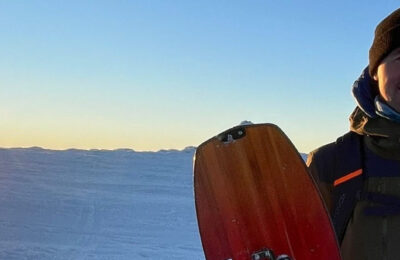
This is where about twenty participants – guided by four mountain guides – gather at a small hotel on the edge of town. The concept is simple: bring together leaders and specialists from research, business, and environmental organizations. Exchange ideas, build alliances – and ski every day.
It’s a group with much on its mind.
Conversations begin at breakfast and continue on the tracks through birch forests and up into the alpine terrain. They carry on during après-ski, in the sauna, over dinner, and during the evening workshops that wrap up around 10 p.m.
And then they continue the next morning.

Hundreds of touring peaks surround Åndalsnes.
The planetary health check
This is my fourth time attending Tarfala Thinktank. The structure remains the same each year.
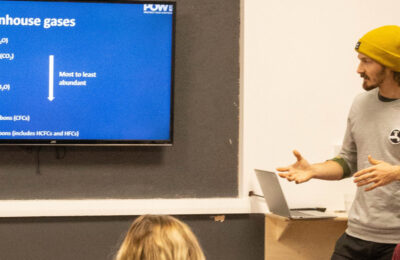
Johan Rockström, who co-founded the think tank in 2017, opens the first evening with his now-famous “Planetary Health Check” – a comprehensive overview of the nine planetary boundaries.
As Director of the Potsdam Institute for Climate Impact Research, Rockström is one of the world’s most influential climate scientists. Similar presentations take him across the globe: one day at the World Economic Forum in Davos, another day before the European Commission.
At Tarfala Thinktank, however, he delivers a deeper version – followed by days of questions and discussion. Even for this audience, hearing the planet’s deteriorating health summarized in such a clear presentation is a sobering experience.
Other participants contribute presentations as well, or ask for feedback and collaboration. Spontaneous working groups form during the evenings.
For a while, it is difficult to see a clear pattern. Topics range from sustainability in sports events to the destruction of old-growth forests.
But on the train back to Oslo, a few themes begin to crystallize.
One stands out above the rest: people working with sustainability today are facing increasingly strong headwinds.

The yearly Planetary Health Check presentation.
1. Science under attack
When Tarfala Thinktank was founded in 2017, there was cautious optimism among climate scientists, Rockström recalls.
The Paris Agreement of 2015 had set a clear direction, and climate action was gaining traction across politics and business.
“At the time we believed the era of climate denial was over. In hindsight, we were extremely naïve.”
The scientific community focused on producing evidence and knowledge. Media outlets and institutions like the IPCC would communicate the findings, and policymakers were expected to act on the science.
Today, that optimism has faded.
Social media platforms have become powerful channels for misinformation. Thinktanks and researchers funded by the fossil fuel industry are promoted as credible authorities. And global political leaders openly dismiss the climate crisis.
“I’m shocked by the flood of disinformation in recent years. Debates we thought were settled have come back. We’re facing an orchestrated and sophisticated campaign delivering its messages at industrial scale,” says Rockström.

Multiple workshops in the evenings.
2. The “corridor of life” and new narratives
Several participants argue that the time for naïveté is clearly over. Repeating the same climate messages will not be enough. New narratives must be developed – and the climate movement may even need to learn from its opponents.
“Science also needs to establish ‘war rooms’ to reach people,” Rockström suggests.
One concept from his presentation resonates with many in the room: the corridor of life.
Climate skeptics often argue that Earth’s climate has always varied. That is true. But since the last Ice Age, the planet has experienced an unusually stable climate. During this period, ecosystems flourished and human civilization developed.
That stable range is what Rockström calls the corridor of life. And it is the corridor we risk leaving once global warming exceeds 1.5°C.
“The term ‘corridor of life’ is clear and powerful. I’ll definitely use it,” says Inga Strümke, one of Norway’s leading AI researchers.
Strümke also warns that rapidly improving AI systems may unintentionally reduce our ability to understand complex scientific issues.
“International measurements show IQ levels declining after decades of increase.”
Another insight emerges during the discussions: climate communication cannot rely on a single narrative.
Multiple narratives are needed.
Martin Kaiser, Executive Director of Greenpeace Germany, presents data showing declining trust in media, scientists, and social media alike. However, many people still trust those closest to them – family, friends, and colleagues.
He describes successful grassroots campaigns where homeowners who installed heat pumps opened their homes to neighbors curious about the technology.
“We need to meet people where they are – and become better at telling stories about solutions,” Kaiser says.

Getting to follow the mountain guides.
3. Beyond the “green transition”
Rockström also calls for new ways of framing the climate challenge.
The planetary boundaries ultimately define the limits of the global economy. Freshwater, biodiversity, and a stable climate are all prerequisites for long-term prosperity.
“We should stop talking about the ‘green transition’ and instead talk about the transition.”
Traditionally, climate scientists have avoided making policy recommendations. Reports such as those produced by the IPCC are designed to inform policymakers, not prescribe solutions.
At the same time, research has increasingly explored which policies can realistically achieve the 1.5°C target.
“There is no doubt that carbon pricing is one of the most effective tools,” Rockström says.
But as climate policy becomes more visible in political debate, it has also become more polarized.
In many countries, far-right parties oppose climate measures simply because they are associated with green parties. Environmental issues have become another front in broader political culture wars.
Yet, there are also messages that can unite people.
One initiative highlighted during the week is The 89 Percent Project, an international collaboration aimed at amplifying the voices of people concerned about climate change. Survey data suggests that between 80 and 89 percent of the world’s population want stronger climate action.
“The number 89 percent is powerful. We should highlight it ahead of Sweden’s national election this fall,” says Kalle Nilvér, CEO of the Swedish company GoClimate.

4. Solutions exist – but need to scale up fast
Research shows that agriculture and food systems are currently the largest drivers pushing humanity beyond planetary boundaries. The second major driver is energy production.
But can the world feed its population while staying within those planetary limits?
Yes, according to Rockström and other researchers.
One promising approach is Conservation Agriculture, currently practiced on roughly 15 percent of the world’s farmland.
“The methods work and can scale. That number could reach 50 percent by 2050.”
Even better: food that is good for the planet – largely plant-based diets – also tends to be healthier for people.
Can industries like outdoor contribute to the transition? David Ekelund, CEO of footwear company Icebug and president of the European Outdoor Group, believes they can.
“In our supply chains we consume a lot of energy. If we help those factories switch to renewable energy, we get immediate emission reductions and can create a blueprint for scaling. There are millions of factories in the World that could install solar, often saving money.”
Projects like this already exist – but they need to scale rapidly, says Ekelund.
The outdoor industry can also help paint a picture of a desirable future within planetary boundaries.
“This trip is a great example of powerful experiences with relatively small footprints. We travel here by train, eat mostly local food, and ski without lifts – yet experience incredible nature and community.”

5. In the mountains – together
The headwinds are strong. Participants with insight into the business sector describe declining sustainability ambitions and shrinking budgets. Environmental organizations struggle to reach audiences while opponents scale up communication using AI.
Yet the atmosphere during the week remains warm and filled with laughter.
Why?
Calle Lundberg, mountain guide and co-organizer since 2017, has a theory behind its success.
“Even within sustainability, hierarchies and groupings exist. But we deliberately mix the groups in favor of new encounters and cross-group interaction when we go skiing.
Perhaps a young participant turns out to be more confident on the mountain than an experienced CEO – which is interesting for the group dynamics. Reversed roles break down barriers and help bring the group together, to everyone’s benefit.”
Brita Staal, Climate & Nature Director at Position Green and co-organizer since 2022, believes the term “think tank” may actually be misleading.
“Some years it becomes more of a ‘do tank.’ Other years it’s more of a ‘be tank.’”
“Either way, there’s always good energy and a strong culture of sharing. In some ways we’re also a support group for hopeful – and sometimes exhausted – climate and nature people.”
Being surrounded by towering mountains, hearing birds in the birch forests, feeling the wind against your face – and, if lucky, skiing a long descent through deep powder – is not just a bonus.
It is the foundation of Tarfala Thinktank.
“I attend hundreds of conferences around the world,” Rockström says.
“This week is my absolute favorite every year.”

Johan Rockström, Director of the Potsdam Institute for Climate Impact Research
Participants Tarfala Thinktank 2026
Gabriel Arthur, Founder, Norr Agency; Editor-in-Chief, Suston Magazine
Hanna Axén, Resarcher, Department of Ecology, environment and geo-science, Umeå University
Josef Nyström Baksaas, IFMGA Mountain Guide
Sven Beyersdorff, Co-founder, Nordic Sustainability
Alexander Crawford, Co-organizer, Tarfala Think Tank
David Ekelund, Co-founder, Icebug
Anders Enetjärn, Founder, Ecogain
Niclas Hällström, Director, WhatNext?
Erik Huss, Glaciologist, CEO, Husstainability AB
Martin Kaiser, Executive Director of Greenpeace Germany
Carl Lundberg, IFMGA Mountain Guide, Skitouring Scandinavia
Elin Larsson, Director of Market and Finance, WWF Sweden
Annika Löwgren, Sustainability Strategist
Gustav Martner, Head of Creative, Greenpeace Nordic
Kalle Nilvér, Co-founder, GoClimate
Alexander Nordvall, IFMGA Mountain Guide
Helena Rimfors, Guide, Jordnära upplevelser
Johan Rockström, Professor of Earth System Science
Brita Staal, Founder, Climate & Nature Director at Position Green
Carl Staal, Group manager, SALT
Isak Stoddard, researcher, Department of Earth Sciences, Uppsala University
Per Espen Stoknes, Associate Professor, Sustainable Business
Inga Strümke, Associate Professor, Norwegian University of Science and Technology (NTNU)
Sofia Sundström, CEO, Cradlenet
Marit Svarstad, IFMGA Mountain Guide
Paul Svensson, Gastronical leader, Rosendals Garden
Sindre Østgård, Partner at We Are Human
Conservation Agriculture
Conservation Agriculture is a farming system that promotes minimum soil disturbance (i.e. no tillage), maintenance of a permanent soil cover, and diversification of plant species. It enhances biodiversity and natural biological processes above and below the ground surface, which contribute to increased water and nutrient use efficiency and to improved and sustained crop production.




Sorry, the comment form is closed at this time.