


Climate change is affecting how we work and spend time outdoors. How should we respond? In this article, Suston shares new risk insights along with practical – and emotional – adaptation advice.

Adapting to a new climate reality
Outdoor professionals and experienced enthusiasts are already seeing the changes: shorter ski seasons and longer wildfire seasons, shrinking glaciers and stronger storms.
The issue of climate change is well known and doesn’t need to be restated here. How this is affecting outdoor life, however, remains an open question. Can outdoor enthusiasts adapt their activities to this new reality – and still enjoy them – while at the same time contribute to protecting the places where they work and recreate?
Mountain guides standing on the frontline
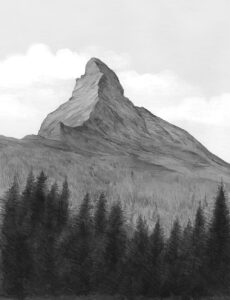 With their day-to-day exposure to the environment and constant need to mitigate risks, international mountain guides are particularly aware of, and exposed to, climate change’s impacts.
Carl Lundberg is president of the Swedish Mountain Guide Association (SBO), and chair for the Environmental and Sustainable Access Committee with the European organization International Federation of Mountain Guides Association (IFMGA). He says the outdoor community has entered a new era where many of the old rules no longer apply.
“As a mountain guide, I am trained and obliged to be honest about risks. The truth is, the hazards we now face were all present before – they have just become larger, more frequent, and increasingly random,” he says.
“Unpredictable seasons and abnormal temperature shifts in particular have become standard.”
These changes are already affecting how outdoor professionals do business. Where guides once offered fixed annual programs on established routes and dependable summits, increasingly unpredictable conditions have led to a shift away from set plans. Programs are now often decided last minute based on current conditions.
According to Lundberg, non-expert outdoor enthusiasts should also think carefully before planning trips.
“What people need to understand is that what worked in the past is in many cases not valid anymore. Books, topos, articles, maps and even personal experience that have worked for decades are all rapidly getting out of date. Once-safe routes might be extremely dangerous now.”
Season creep: adapting to milder winters
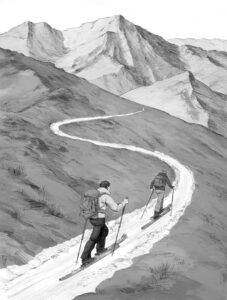 One of the most noticeable signs of climate change is seen during the winter months. While good seasons with high snowpack still occur, the general trend is that winters are becoming shorter and more unpredictable.
Industry professionals and enthusiasts are already adapting by shifting snow-based activities to higher elevations or colder regions. Tools such as Snow.forecast.com and Onthesnow.com are increasingly used to monitor real-time snowpack conditions, while Windy.com provides backcountry snow depth estimates based on forecasted precipitation and temperature.
Warmer winters are also driving rapid changes to glaciers. Previous experience and guidebooks can no longer be relied upon, as new crevasses form and snow bridges weaken or disappear. Thawing permafrost is increasing the risk of rockfalls and landslides, while temperature variability is creating new avalanche patterns.
Erring on the side of caution is now essential when planning routes. Hiring a certified guide familiar with local conditions is increasingly recommended.
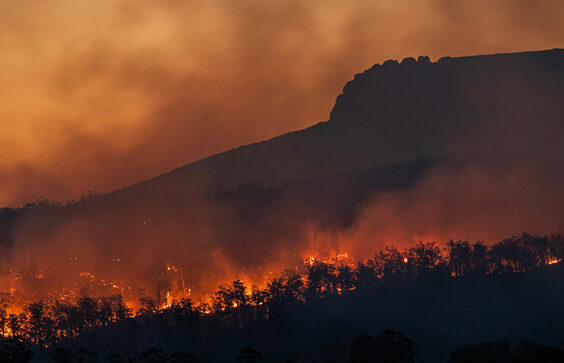
Summer is now “fire season”
Warmer summers are bringing higher risks of wildfires, heat waves, and extreme weather. As with winter activities, adaptation begins with staying informed. Forecasts should be checked before any outing, whether a short day trip or a multi-day expedition.
High temperatures and humidity significantly increase the risk of heat exhaustion, particularly during strenuous activity. Close attention to weather alerts is critical, especially for heavy rain, flash floods, strong winds, and lightning in exposed terrain.
Online platforms such as Windy.com offer wind forecasts, while Lightningmaps.org provides real-time lightning strike tracking. Firemap.live allows users to monitor active wildfires and air quality conditions.
During fire season, caution is essential. Avoiding open flames, using established cooking areas, and reporting unregistered wildfires to emergency services are key safety measures. Many local fire departments also offer volunteer training related to fire prevention and disaster response.
From climate adaptation to mitigation
While risk management tools can reduce immediate dangers, Lundberg emphasizes that adaptation alone is not sufficient.
“What we really need to do is end the harmful actions that are contributing to this situation all together,” he says.
“If one is lucky enough to have the opportunity to explore the outdoors for recreation, it should be done with as low a footprint as possible. The mountain ethics state that we are all obliged to take part in the rescue. In this case, we need to rescue nature from our unsustainable way of life.”
Lundberg urges outdoor enthusiasts to reduce carbon emissions through immediate lifestyle changes while also supporting broader climate mitigation efforts.
From individual to collective action
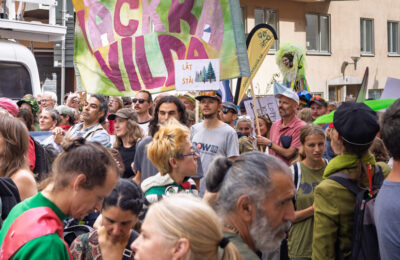
Lundberg says political engagement is as important as individual action. This includes voting for representatives who support ambitious climate policies and applying pressure beyond election cycles.
Organizations such as Protect Our Winters work with the outdoor community to address climate impacts collectively.
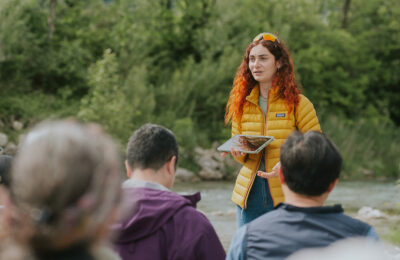
“We need to become climate advocates, because lifestyle tweaks alone won’t add up to the scale of impact required to address the climate crisis,” says Gillian Rosh, advocacy specialist at Protect Our Winters Europe.
“That’s why we need policy and structural changes to make those lifestyle choices actually possible for everyone.”
Taking action can make a difference
Rosh also highlights the emotional benefits of collective action.
“In these times, it often feels like we’re standing alone. But when you go out to climb, bike, or ski, do you go alone? Usually not. You bring a friend. That ability to connect, to open up and share experiences, is what makes the outdoor community unique and gives us a strong foundation to advocate for real change.”
“Building community is powerful.”
Winter Can Still Be Saved
In a recent study, MIT researchers found that ski seasons in North America could shrink by up to two months by 2050 if emissions continue to rise along their current trajectory.
The study also found that winter could be reduced by as little as two weeks with ambitious climate action (Scott & Steiger, 2024).
Illustrations by Graham Samuels




Sorry, the comment form is closed at this time.