


We can hardly ignore our own kids – and that’s precisely the point. The Fridays for Future movement, now over one million strong, is demanding that us grown-ups… well, grow up. How should the outdoor community respond?
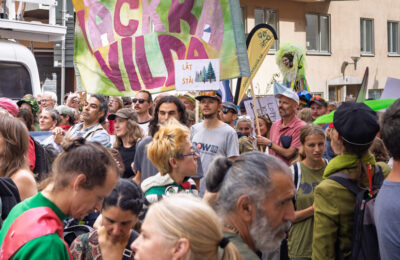
What started out with 15-year-old Greta Thunberg sitting in front of the Swedish parliament every school day for 3 weeks has turned into a full-scale social media and real-world phenomenon.
It’s tempting to belittle the movement as being led by well-meaning yet naïve youth. But their demands for politicians to implement proven solutions, in order to meet their own legally-binding pledges in the Paris Agreement and its science-based target of 1.5 degrees warming, are anything but ill-informed. Moreover, with an estimated 1.4 million participants from around the globe, these “kids” have spawned what’s becoming one of the largest, most coordinated and sustained global protests in history.
At its core, the strike embodies the collective frustrations of a generation who feel abandoned by their adult counterparts. Global average CO2 emissions are back on the rise (2018 saw a record of 37.1 gigatonnes), developed countries continue to produce and consume at high rates, and oil and natural gas are seeing accelerated use. In Greta’s words: “why study for a future which may not be there?”
Climate action is an Outdoor issue
We already know that the outdoor community cannot divorce itself from the climate struggle. Still, establishing the right course of action with respect to Fridays for Future is understandably hard. How can the outdoor community best support this movement – without coopting it and disempowering its young initiators?
We can do so by first acknowledging the relevance and legitimacy of the strike, and how it serves to amplify the voices of those that will, arguably, be most affected by climate change. But it can’t stop there. Young people require a cooperation from those in positions of power. And this is the crux of the strike – it’s intended to be a peoples movement following the call from Greta. That is, the movement isn’t solely about meeting the needs of a younger generation, but our urgent, collective need for systemic change towards a more sustainable future.
The outdoor community can be a vessel for solidarity as well, supporting young people both directly and indirectly. Parallel groups, including some from the outdoor community, have already taken shape and stood shoulder-to-shoulder with the youth on the picket lines, supporting the movement and its goal of pressuring politicians into making fundamental changes on the level of policy. Without those changes, any personal climate mitigating efforts will simply not be enough.
Are you or your organization getting involved with the Fridays for Future movement or making emissions reductions that are in line with the Paris Agreement?
If so, we’d love to hear about it! Fire a quick email to editors@sustonmagazine.com and we’ll get back to you.








Sorry, the comment form is closed at this time.