


In mid-May, the new major initiative European Outdoor Week made its debut. Riva del Garda proved a strategically strong choice as a somewhat bruised outdoor industry came together to regroup. Suston was there to kick-start it, together with GreenroomVoice, bringing a group of dedicated communicators out for a Hike & Talk.
If sustainability communication was challenging to navigate before, it is a jungle now. Some outdoor companies avoid the complexity through greenhushing – while others create new ways to reach out with their achievements and purpose. How can they find their way through?
That question was the starting point for a Hike & Talk organized by Suston and Greenroom Voice during European Outdoor Week in Riva del Garda. But first, a brief recap of the event itself.
Last year, the OutDoor trade fair in Munich was cancelled due to insufficient bookings. Following a research process, the European Outdoor Group partnered with trade fair organizer MagNet on a new joint event in Riva del Garda, Italy. The result was the European Outdoor Week – comprising three parts: the Outdoor Impact Summit sustainability conference, a public outdoor festival called Activation Days, and a combined outdoor and trail running trade show called Outdoor & Orbdays.
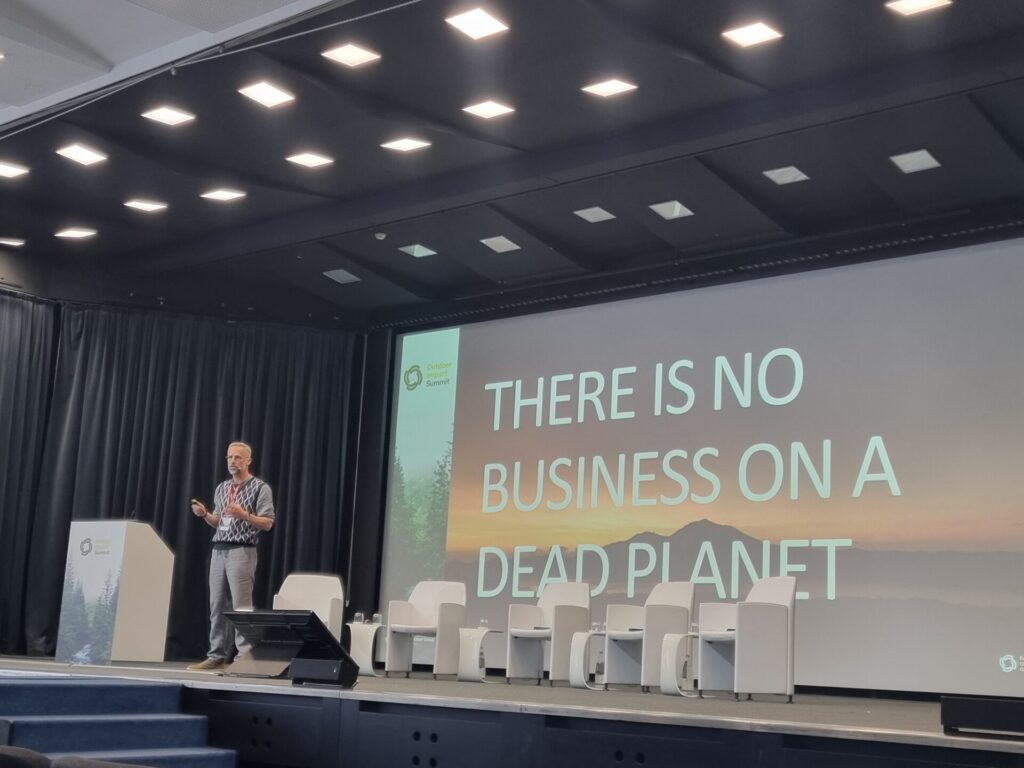
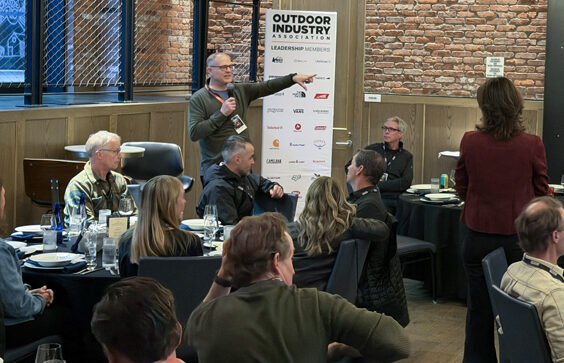
Christian Schneidermeir, Director of EOG, opened up the Outdoor Impact Summit with a harsh reminder. (Photo: Gabriel Arthur)
A sense of optimism
Gabriel Arthur, editor-in-chief of Suston and founder of NORR Agency, has attended most major European trade fairs and industry gatherings over the past two decades.
“Riva del Garda gets high marks from me. With its fjord-like lake and surrounding mountains, the place breathes outdoor. All the hikers, runners, cyclists, and windsurfers – especially during the weekend’s Activation Days – contributed to the atmosphere,” says Arthur.
“The Outdoor Impact Summit, which ran for one and a half days, is needed in the industry. With more than 200 participants, it shows that sustainability issues matter and that there is a desire to meet and network. There were many strong presentations, but sometimes too much focus on ‘why’ rather than ‘how.’ Personally, I got the most out of the more niche and solution-oriented presentations. And the conversations – with so many experts on site, it would be fantastic to find a format that made better use of the collective expertise.”
“Outdoor & Orbdays had good energy. You could tell that people wanted to be there, unlike during the final years of the Munich fairs. But in Munich, sustainability was a core part of the trade shows. In Riva del Garda, the focus was more on doing business. Does that reflect the lower status of these issues outside the sustainability bubble? Or perhaps uncertainty about how to communicate them to a broader audience? In any case – this was a good relaunch of the trade show.”
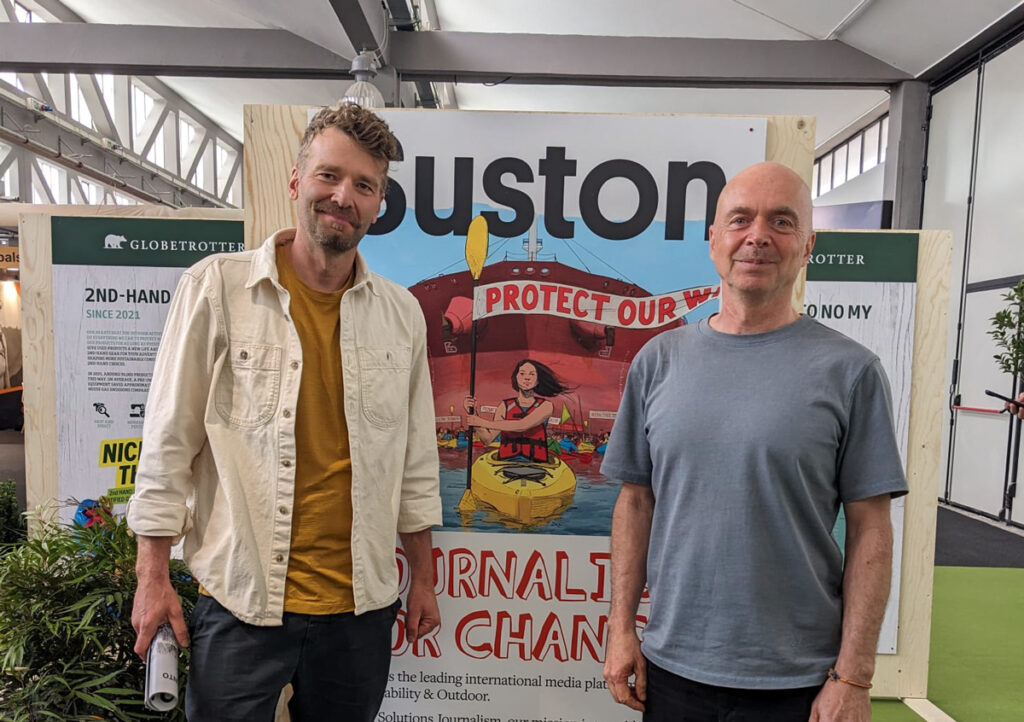
Jonathan Eidse and Gabriel Arthur presented Suston’s Solutions Journalism at the Sustainability Hub at Outdoor & Orbdays. (Photo: My Hedhammar)
Hike & Talk – co-creating sustainability communication on the trails
At the Outdoor Impact Summit in Munich in 2025, Suston and GreenroomVoice introduced what may become a recurring format: starting the summit outdoors with a guided hike and facilitated discussion.
That year, a group of communicators joined Gabriel Arthur, Cira Riedel, and Anna Rodewald for a hike along the Isar River. This year in Riva del Garda, more than thirty participants signed up – and showed up despite a forecast of rain.
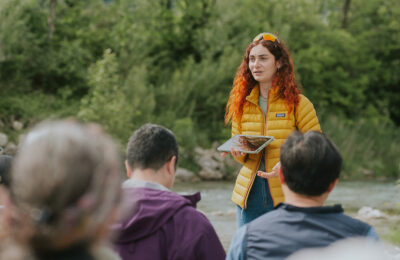
Representatives from outdoor companies, communications agencies, and consultancies set out in three groups, each with its own theme. They hiked through steep forest above Lake Garda before gathering at a restaurant built into the rockface that defines the Riva valley, where the discussion continued over espresso and tea.
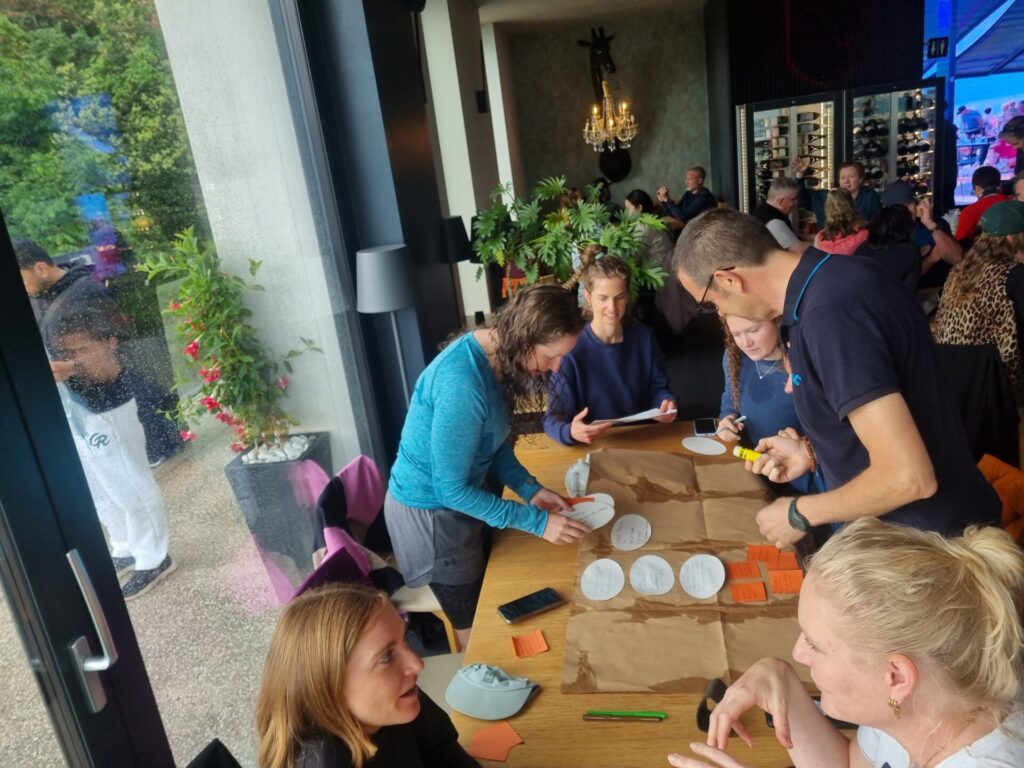
Brainstorming at a mountain café in Riva del Garda. (Photo: Gabriel Arthur)
1. Future-proof your story: Speak up in a regulated era
The group led by Gabriel Arthur examined a central question: As new EU legislation reshapes what sustainability claims are permissible, some brands are opting for silence. Does that protect credibility – or undermine trust?
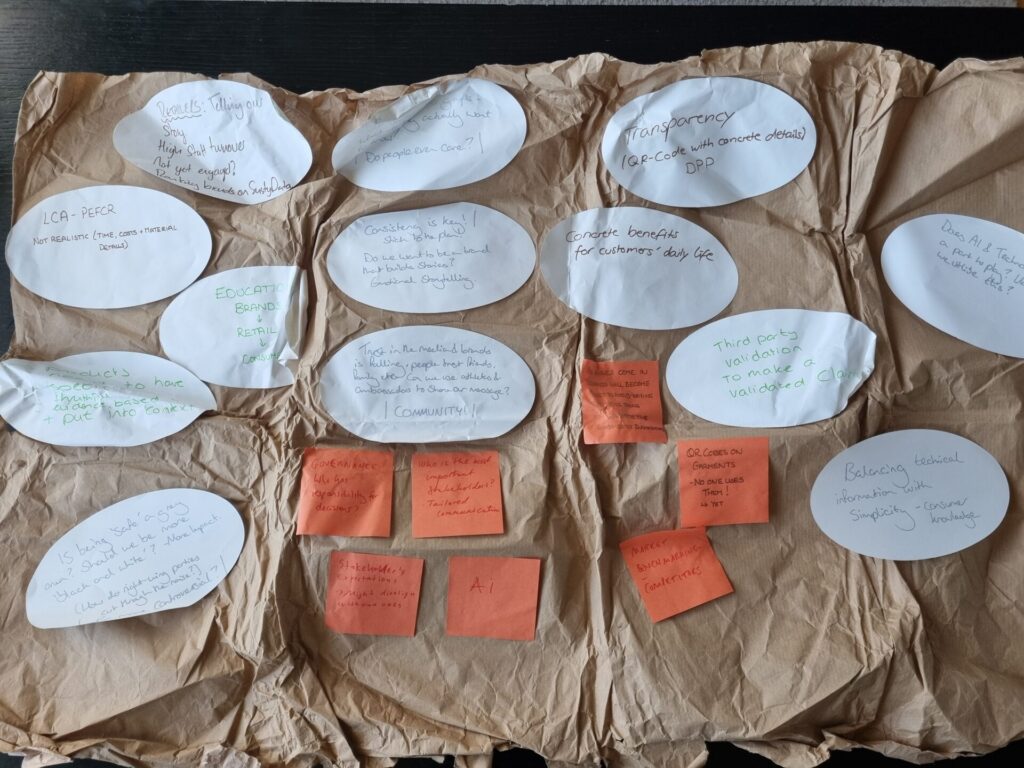
“The question I asked had the EU’s Empowering Consumers directive as a backdrop. It was clear that this legislation, coming into effect soon, was a headache for many in the group. What – if anything – can be claimed? We divided into three sub-groups, focusing on products and point-of-sales communications; stakeholders; and storytelling, goals, and visions,” Arthur says.
Products and point-of-sales comms – keep it simple
“No doubt this is a tricky area – the discussion meandered with no clear answers in sight.
“The use of QR codes on hangtags was questioned. How many buyers actually use them? QR codes might be needed for compliance, but relying on them for communication may be a waste of resources.
“LCA information was not a favorite either. Buyers need a high level of knowledge to understand it.
“Approved – and well-known – certifications might be the easiest way to claim something on product level. For some certifications used in the outdoor industry, this means stepping up their own communication.”
Stakeholders – if they believe you, others will
“Creating a foundation that helps stakeholders understand and feel empowered can be a stepping stone for further communication. Stakeholders such as employees, owners, NGOs, and partners have different needs – but if they believe you, others will.
“How? Tailor your communication depending on who you are addressing, and set priorities. Which stakeholders are most important? Collecting benchmarks from other brands is always useful. And education is key to empowerment – both internally and externally.”
Goals, visions, and stories – build trust step by step
“We discussed research showing that many people today distrust companies, politicians, and even scientists. On the other hand, many listen to people they know – family, friends, colleagues. How can an outdoor company spread its messages word by mouth? Getting involved in – and supporting – communities can be one way.
“Also on the personal level: When outdoor retailers scrap their own eco-labels, their staff becomes even more important. Education is empowering.
“We also said that simplicity and consistency are key when a company wants to tell its bigger story. Make a long-term communication plan – and stick to it!”
The workshop energy was high despite rain-soaked clothing.
(Photo: Gabriel Arthur)
2. Under pressure: Does sustainability sell?
The group led by Cira Riedel, co-founder of GreenroomVoice, used market research as a starting point. Riedel quoted Fredrik Ekström, a consumer-centric brand marketing strategist:
“78% of people globally believe we are heading for environmental disaster, yet 71% feel they are already doing everything they can. That gap – between aspiration and action – is where brands and retailers either win or lose.
“The instinct is often to communicate harder, label more clearly, certify more rigorously. But the group pushed back on this. The environment is not the most persuasive argument. Community, economics, wellbeing, and self-improvement are. The conversation that moves people rarely leads with the problem. It leads with something people already care about. This is a fundamental reorientation of how the industry thinks about its own value proposition,” Riedel says.
Signal vs substance
“A recurring theme was the gap between signaling sustainability and actually delivering it. Eco factors, the group noted, are not among the top four reasons a consumer is first attracted to a brand. But they are powerful drivers of loyalty, repeat purchase, and long-term relationships. Many brands spend marketing budget trying to attract new consumers with sustainability messaging, when its real power is deepening relationships with people who already trust you.
“And then there is greenhushing. In the outdoor segment, the group agreed, there is both a need and a responsibility to talk up the good. Silence is not safety. It is a missed opportunity to shift the culture.”
Nature as the bridge
“Perhaps the most generative thread reframed sustainability not as a category or label, but as a lived experience – and the outdoor industry as uniquely positioned to make that connection real. The customer who buys hiking boots, camps on weekends, and explores trails is already halfway there,” says Riedel.
“Several ideas pointed toward a more deliberate approach. Iconic brands can shape what is considered desirable. That influence could be redirected: not just toward performance and adrenaline, but toward slowness, reflection, care, and connection. The downhill story is thrilling. But the uphill story – quiet, effortful, contemplative – is where nature actually gets under your skin.
“And at the heart of it all: durability. A well-made product that is honestly communicated, easy to repair, and built to last does not just reduce environmental impact. It builds trust, deepens the customer relationship, and turns a transaction into a story the customer keeps telling.”
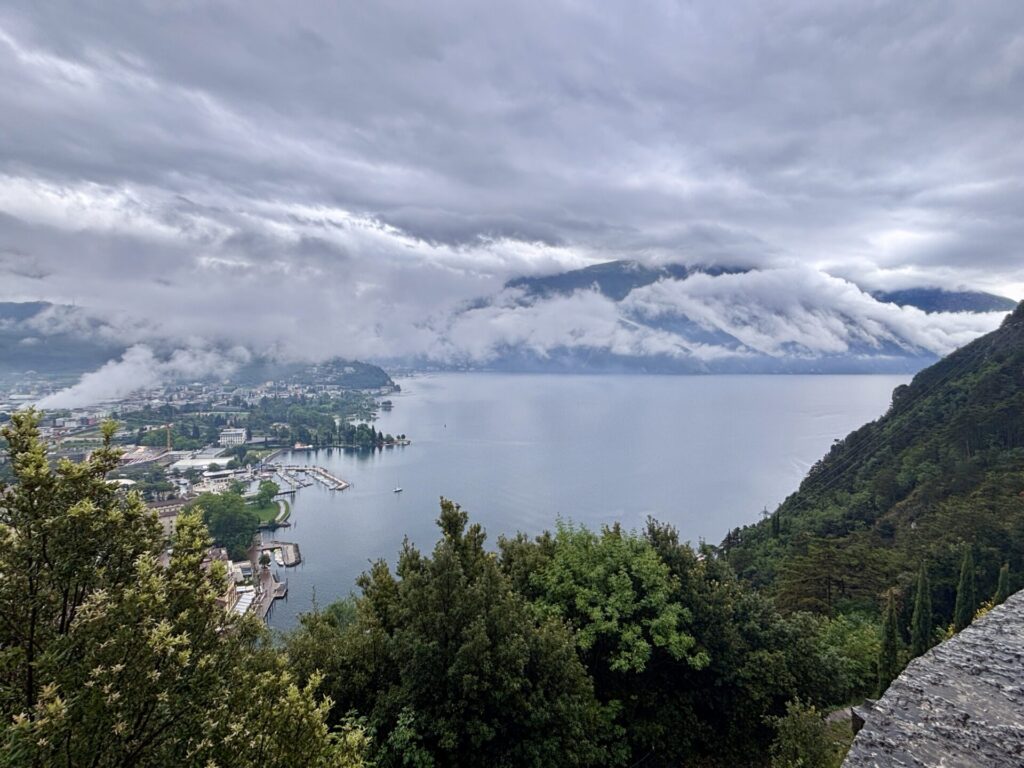
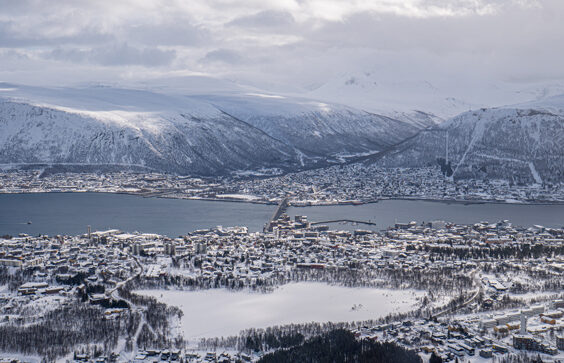
View over the northern, fjord-like end of the Garda lake. (Photo: GreenroomVoice)
3. Listen and spread the messages from the wild
The third session, led by Anna Rodewald, co-founder of GreenroomVoice, took a more personal direction. Where the other groups wrestled with strategy and regulation, this one asked a more fundamental question: How does the outdoor industry ensure its connection to nature is more than a tagline?
“Make it less epic. This came up more than once. Outdoor culture has built itself around the extraordinary: the summit, the extreme descent, the feat of endurance. But for most people, nature is not a performance. It is a walk. A slow afternoon. Keeping it mellow, doing what makes you happy, experiencing nature at your own level – not for anyone else, not for the feed, but for yourself. The industry’s obsession with the epic may be its biggest barrier to reaching the people who need nature most,” Rodewald recalls.
“Go outside with others. Share your love for the outdoors. Bring people along on adventures, not as a brand ambassador or content creator, but as a friend. Speak about why nature matters. Plan time outside with others.”
Rethink what we are optimizing for
“One observation reframed the economic logic of the industry: The shift we need is not from ‘how do we produce as much as possible at the lowest cost’ to a more future-proof version of the same question. It is to: ‘How do we produce maximum prosperity from our resources?’ That single reframe changes everything: what you make, how you make it, how long it lasts, and what it means.”
“Related to this was the idea of moving from taxing work to taxing resources at the point of consumption – a reference to Lagom economics – and the principle of taking only what you need. This is a concept that the outdoor industry, with its roots in simplicity, endurance, and respect for the wild, is better placed than most to understand and embrace.”
The session ended without firm conclusions but with a shared recognition: authentic communication about nature starts with authentic experience of it. The most effective way to make others feel that connection is not to explain it, but to take them outside.
Reflections in retrospect
Arthur, Riedel, and Rodewald agree: no single answer emerged from the rain-soaked hillside above Riva. The organizers share three takeaways from the day.
- Among sustainability professionals, there is a strong need for discussion and peer exchange – many are dealing with the same challenges with little support around them.
- Communicating sustainability was difficult before; new and frequently changing EU policies have made it considerably harder. It remains possible, but requires greater care.
- The outdoor industry and its people are well-positioned to lead by example – building long-term value and genuine stories by helping others connect with nature.
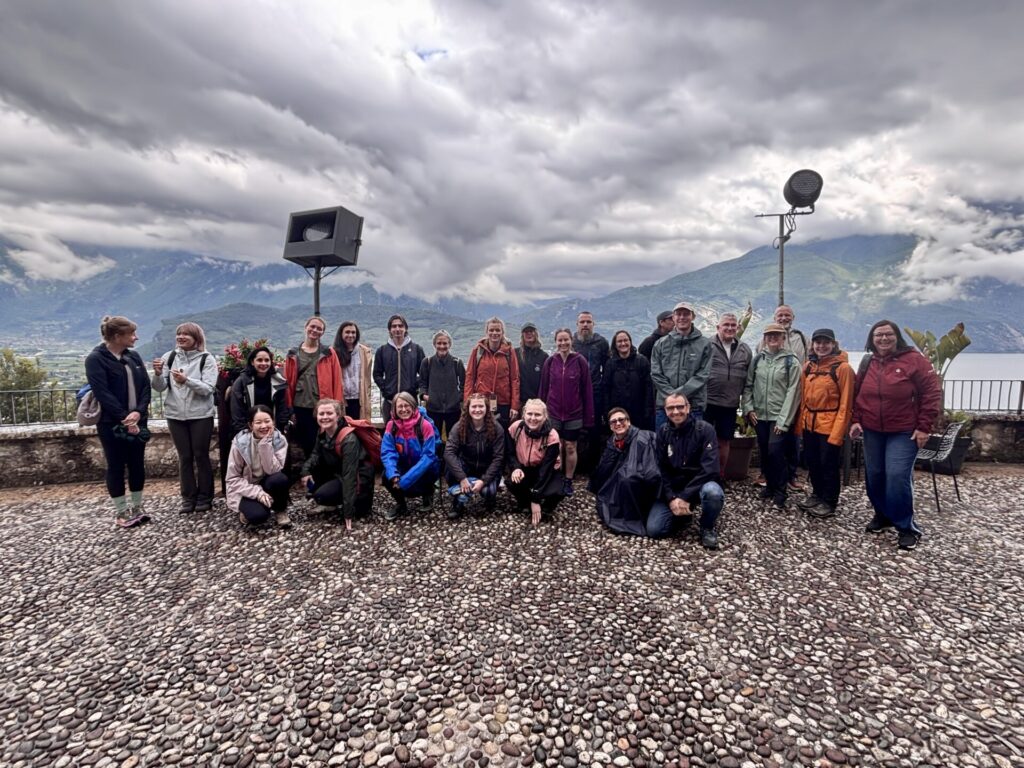
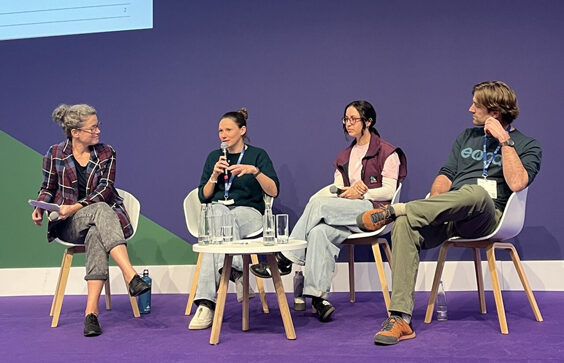
(Photo: GreenroomVoice)
Lead Image: Gabriel Arthur




Sorry, the comment form is closed at this time.