


PrimaLoft ReRun is a technology platform designed to turn textile waste into insulation materials. Andrea Paulson, SVP of Innovation and Technology at PrimaLoft, explains how the system works and the challenges of scaling textile-to-textile recycling.
What is PrimaLoft ReRun and what problem does it address?
We are breaking the linear model of consumption with the launch of our new PrimaLoft ReRun technology platform, which transforms textile waste into high-performance, sustainable insulation designed for longevity.
How does the PrimaLoft ReRun platform work?
We utilize both mechanical and regenerative recycling processes.
Our closed-loop mechanical process reclaims discarded textiles to create a unique blend of one-of-a-kind insulation products. We do this by reclaiming, deconstructing and re-engineering pre-consumer footwear textiles. By precisely blending this reclaimed material with premium PrimaLoft fibers, we create a uniquely circular insulation that meets our industry-leading performance standards.
Through our regenerative recycling process, we are closing the loop at a molecular level. Through this approach, we strip away all impurities, such as dyes and finishes, and regenerate textiles, breaking them down to their base polymers and rebuilding them into virgin-grade PET pellets. This allows us to engineer premium insulation from waste with zero compromise on quality performance, or durability, creating high-performance insulation that sets a new standard for circularity.
Which insulation products are launching with PrimaLoft ReRun?
We are proud to announce two new product launches, ThermoPlume PrimaLoft ReRun and Silver PrimaLoft ReRun.
ThermoPlume PrimaLoft ReRun uses a mechanical process that combines shredded textile waste with PrimaLoft fibers to create feather-like plumes. This loose-fill insulation blend results in a flattering, down-like silhouette for versatile styling. It’s composed of 100% recycled content, of which 30% is mechanically recycled, pre-consumer footwear uppers.
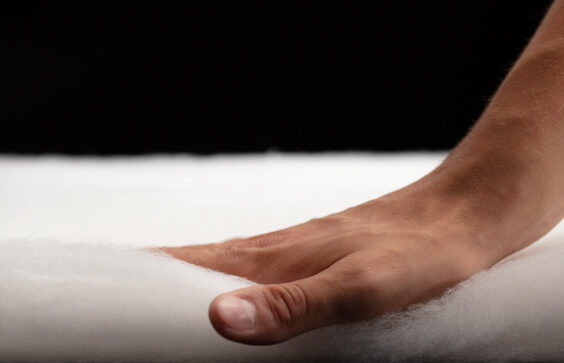
Our Silver PrimaLoft ReRun is made using a regenerative recycling process to provide uncompromised performance. Soft, fine fibers provide excellent thermal efficiency for lightweight warmth and versatility. It delivers performance on par with best-in-class insulation and is made with 100% recycled content, including 50% regeneratively recycled textiles.
Why develop both mechanical and regenerative textile recycling?
When developing the new technology platform PrimaLoft ReRun, it was important that it encompassed multiple, complementary circular solutions to maximize use of recycled materials and combat textile waste. By using both a mechanical and regenerative textile-to-textile recycling approach, we’re able to leverage pre- and post-consumer textile waste to create new materials.
We’re committed to providing unparalleled service to our brand partners and, depending on the product being developed, there are benefits to both regenerative and mechanical textile-to-textile recycling, so it was important for us to provide both.
How does ReRun insulation compare with materials made from virgin inputs?
Textile-to-textile processes are the next frontier in developing recycled products. It wouldn’t be surprising for textile-to-textile to become the successor to rPET sourced from plastic bottles. However, to-date, the industry still needs to evolve to achieve consistent performance parity, or even improvement, compared to existing materials.
This is where technology like Silver PrimaLoft ReRun represents an exciting advancement. Using a regenerative recycling process, we’re able to achieve performance parity with our existing industry leading insulation products. Our hope is that this becomes a real game-changer.
What are the main challenges in sourcing textile waste at scale?
Producing high-performance insulation materials requires a consistent and reliable quality of feedstock. This is a fundamental challenge sourcing and processing textile waste at scale.
Governing bodies and related policy need to evolve more rapidly. This is a key area where industry collaboration can drive progress; brands and organizations will require a globally recognized standard for the various textile-to-textile manufacturers, including traceability and certifications.
Scaling to meet the demand from brands is dependent on the scaling of the textile-to-textile suppliers. The current pace of building and bringing regenerative reactors online cannot keep up with the demand we are seeing from our brand customers. This is both a good and bad problem. A slow and steady pace will allow the industry to ramp up effectively, but there will be unmet desires. Offtake agreements and commitments will be essential for manufacturers for the foreseeable future.
Where does the recycled textile feedstock come from?
There are a few sources and feedstocks available to us. Currently, we use a mixture of post-consumer, pre-consumer, and post-industrial waste. That list will continue to grow as we expand the program and its offerings. It will also continue to evolve as more recyclers, reactors, and logistical solutions come online.
What types of apparel are best suited for ReRun insulation?
ThermoPlume PrimaLoft ReRun is a loose-fill insulation made of feather-like plumes, making it an ideal down alternative.
Silver PrimaLoft ReRun is comprised of soft, fine fibers that deliver excellent thermal efficiency in apparel that requires lightweight warmth and versatility.
How can PrimaLoft help accelerate a circular textile system?
As a component of finished garments, PrimaLoft is in a unique position to enable circularity across the apparel industry, working with more than 1,000 global brands across a variety of industry segments.
At PrimaLoft, we don’t inventory product. Each order is made on demand for our brand partners. So, if that product is going to be made, it is our responsibility to ensure it is made under the best conditions, with the best possible materials, using the most sustainable practices available. Sometimes that means making what a brand asks of us, and sometimes it means having products ready for them to implement before they are ready for it.
How could ReRun evolve within a textile-to-textile circular system?
We are committed to advancing mono-material garment options, regardless of the polymer, to simplify recycling and support a truly circular model for our customers.
Our unique position as an industry catalyst allows us to connect brands with the ideal textile-to-textile solutions. Whether it’s a regenerative process, localized source, or the end polymer, we introduce our brands to the correct textile-to-textile solutions. For brands that already have a textile-to-textile supplier, we aim to integrate our insulation materials to create a cohesive and effective circular story.
About PrimaLoft
PrimaLoft is a materials technology company specializing in insulation and performance materials used in apparel, footwear, and equipment. The company works with more than 1,000 global brands across outdoor, fashion, home, and workwear segments.
Lead photo: PrimaLoft






Sorry, the comment form is closed at this time.