


We measure it, report it, reduce it, market it, benchmark it and, increasingly, monetize it. Yet for all our talk of impact, I wonder if we’re avoiding a more uncomfortable question: what if sustainability isn’t actually solving the problem?
Before anyone reaches for the unsubscribe button, hear me out.
Across the industry, we celebrate lower carbon footprints, recycled content, circular initiatives and sustainability targets. These achievements matter. They represent progress. But progress towards what exactly?
Because many of the same companies championing sustainability are still built on a business model that depends on selling more products next year than they sold this year.
That contradiction sits at the heart of our industry’s impact challenge.
Two places, two truths
Recently, I visited Kenya. A dream holiday which for me meant safari and sharing with my children the beauty of animals in their true environment. On another level, my heritage, where my mum was born and my dad grew up.
On safari, we were surrounded by extraordinary wildlife and stunning landscapes that reminded me why conservation matters and the bigger picture of biodiversity on our planet.
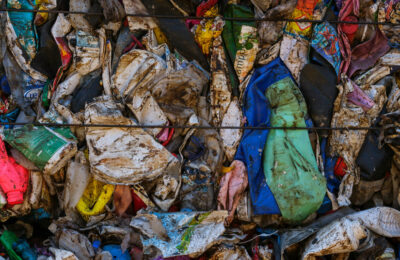
Days later, I stood at Dandora dumpsite in Nairobi, confronted by mountains made of discarded products, self-combusting in front of my eyes, from a global economy that rarely sees its own waste. I also visited Gikomba market, where second-hand clothing creates livelihoods, entrepreneurship and opportunity. However, it is now saturated by the constant incoming of more and more clothing being discarded from around the world.
Two places. Two truths. The dark and the light.
Conservation is real.
Waste is real.
Human resilience is real.
The problem is that our industry often prefers stories that are far simpler than reality.
We like heroes and villains. Good products and bad products. Sustainable and unsustainable. But impact doesn’t work like that.
A recycled fiber can still fuel overconsumption.
A circular business model can still depend on perpetual growth.
A sustainability campaign can still encourage people to buy things they don’t need.
The uncomfortable reality is that many of our environmental problems are not just production problems. They are consumption problems. And consumption is deeply psychological.
For decades, our industry has helped shape a culture where newness equals relevance and ownership equals identity. We rarely discuss this influence because it sits beyond carbon accounting and ESG dashboards. Yet it may be one of the most significant impacts we have.
The question we need to ask
So here is the debate I think we need to have:
Can an industry predicated on growth ever truly become sustainable, or are we simply becoming more efficient at sustaining the unsustainable?
That’s not a criticism. It’s a question.
And until we’re willing to ask it openly, we risk mistaking optimization for transformation.
The future of impact won’t be decided by better reporting alone. It will be decided by whether we are brave enough to challenge the assumptions that got us here in the first place. And a change in mindset in the process.
Perhaps the most sustainable thing the textile industry could do next is not create a better product.
Perhaps it’s creating a new definition of success.
Images: Bowie Miles






Sorry, the comment form is closed at this time.