


Suston joined Performance Days 2026 in Munich, where Victoria identified five developments shaping how the functional textile sector is moving into implementation.
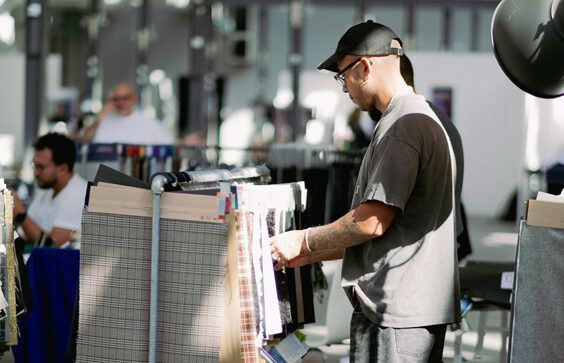
At Performance Days in Munich, the March edition brought together around 3,300 visitors and 560 exhibitors, continuing the performance wear sector’s strong focus on innovation and applied solutions. Visitor highlights from previous visits have invariably been material breakthroughs or novel processes – and there are still plenty of these to be found. But across the fair, a shift toward systems, infrastructure and accountability as part of day-to-day operations was evident. A certain “sustainability maturity,” if you will, is taking form.
Suston attended the event, where reporter Victoria Reim found five themes that reflected this transition.
1. From ambition to execution
Across the fair, a clear shift was visible. Circularity, recycling and compliance are moving beyond the conceptual stage and into real-world application. The focus is now on implementation: how to scale solutions, standardize processes and integrate them into existing business models. Sustainability is becoming operational.
2. Wool, reconsidered
Wool is gaining relevance in performance textiles, expanding beyond base layers into insulation. Developments presented at the fair showed how wool is being adapted for broader performance use, and in some cases partially replacing synthetic materials.
From a Nordic perspective, this approach is familiar. Wool has long been treated as a functional material for demanding conditions. Brands such as Aclima have built their work on this understanding, developing wool as a technical solution over time. What is changing now is its wider adoption across the industry.
3. The limits of recycling
Textile-to-textile recycling remains central, but its limitations are becoming clearer. While technologies continue to develop, the main barrier lies earlier in the value chain: collection and sorting. These systems are still insufficiently developed and fragmented, particularly in Europe. Without consistent and reliable input streams, recycling remains difficult to scale.
4. Infrastructure, not innovation
This points to a broader shift in focus. The challenge is less about new materials and more about systems. Investment in collection, sorting and collaboration across the value chain is becoming essential. Circularity ultimately depends on how well these elements are connected.
5. A new standard for communication
Regulation is beginning to reshape how sustainability is communicated, creating new challenges in the process. With upcoming EU legislation such as the Empowering Consumers Directive, generic environmental claims are coming under closer scrutiny.
Terms such as “eco,” “green” and “sustainable” will require clear evidence and substantiation. For companies, this changes the focus. It is no longer only about what is communicated, but also how. Claims need to be precise, comparable and backed by verifiable data.
This also means communication can no longer be separated from product and process. What is said externally must reflect what is actually implemented. In practice, this raises the bar and makes communication a more accountable part of the value chain.
Putting it into practice
Alongside these broader developments, several examples showed how this shift is already taking shape. Mammut’s use of recycled climbing ropes is one of them. Waste materials are turned into new products while avoiding unnecessary additional processing steps. It is a practical approach focused less on concept and more on execution.
Taken together, progress is visible, but it depends on infrastructure, collaboration and how well different parts of the system are connected. In short, this edition of Performance Days showed that sustainability today is less about new ideas, and more about making existing ones work.
Lead image: Performance Days







Sorry, the comment form is closed at this time.