


Outdoor brands promise long-lasting gear – but research shows durability is far more complex than it looks. From hidden failure points to the role of maintenance, the science behind longevity challenges both industry assumptions and consumer habits.

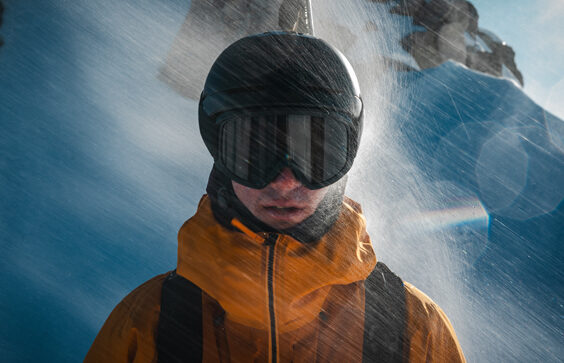
Razor-sharp rocks. Icy blizzards. Torrential rain. Searing sunlight. That’s just to name a few. For years, designers of outdoor gear have been trying to be one step ahead of nature and the countless ways it can tear their products into shreds. In this industry, durability has always been something of an obsession.
Then there is research finding that one can nearly halve a product’s overall environmental impact – including carbon emissions, water and waste – by doubling the number of times it is worn. Durability has also made it to the top of the sustainability hierarchy.
Finally, customers are drawn to brands with a reputation for durable products, and their cost-per-wear is similarly reduced the longer they keep the product in use. Durability pays for itself.
In short, there are a host of clear reasons for both brands and consumers to seek greater durability. But as it turns out, exactly what makes a product “durable” in the first place is anything but clear.
Establishing durability benchmarks
Researchers at the Sports Tech Research Centre (STRC) at Mid Sweden University are working hard to address this knowledge gap. Together with more than 45 industry partners, including Gore-Tex, Patagonia, The North Face, Norrøna and Fjällräven, the Centre leads the independent, EU-funded “Durability Project.”
In its first phase, researchers collected and visually inspected 384 end-of-life waterproof shell jackets from consumers to understand how and where products fail in use. The newly completed second phase then examined jackets under simulated environmental conditions, assessing how wear, material degradation, and construction details affect waterproof performance over time.
Judith Waller, lead researcher at STRC’s Durability Project, shares what they have found during the thorough testing:
“A jacket’s visual condition simply does not reflect how well it will perform over time – it requires testing.”
She explains that some jackets appeared to be in excellent condition, but leaked significantly during tests. Others, meanwhile, looked heavily worn but were found to still perform relatively well.
The research also identified several jackets in great overall condition, but for some reason the user had chosen to end the product’s lifespan early. Waller speculates that this may have been due to poor fit, changing preferences, or a lack of attachment to the product.
“Relevance and emotional durability matter, absolutely. But I can’t quantify these in a meaningful way within this project. We’re focusing purely on the physical aspects of durability.”
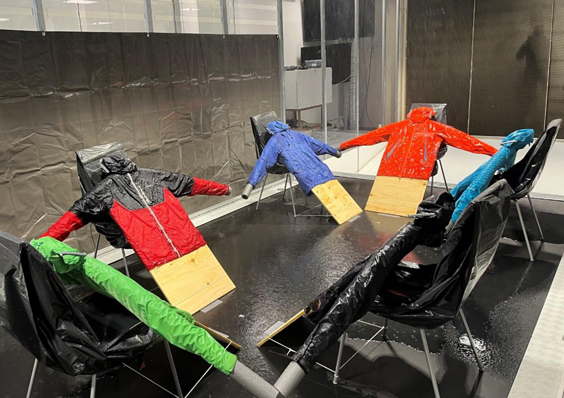
A sample of jackets undergo a simulated rain test (Photo: Sports Tech Research Centre (STRC), Mid Sweden University)
What makes a product durable?
While the research is ongoing, the findings already offer practical insights into how durability can be evaluated in use. As Waller shares:
“At the risk of generalizing, the more complexity you introduce, the more potential failure points you create.”
Importantly for consumers, the research also indicates that durable performance cannot be judged by appearance alone. As Waller explains,
“You can get jackets that look incredibly tough, and they soon leak like a sieve.”
Waller suggests that brand choice can serve as a general indicator. Established brands are more likely to offer consistent quality and follow standardized production processes, while also providing repair and warranty services. At the same time, lower-cost brands may still perform well when used appropriately.
But for those who do want to make their own judgments, try to imagine how the jacket would perform in a sustained downpour. The research shows that whole fabric panels rarely fail. Instead, water is often directed into weaker points through the geometry provided by the garment’s construction. Zippers, pockets and openings are frequent entry points for water, especially if they are not protected by flaps or overlapping panels.
Similarly, seams and sealing are key factors, with poorly executed seam taping and stitched-through areas among the most common failure points. This is particularly evident at cuffs, hems and shoulders, where exposure is highest.
Maintenance matters
If materials and construction determine how long a jacket can last in theory, maintenance influences how long it will last in practice. Here, one of the clearest findings from both the research and observed user behavior is that many consumers avoid the number one way to care for their shell jackets: washing them.
“To be honest, there’s still a little bit of me that doesn’t want to put it in my washing machine either,” Waller admits, before continuing:
“And I know I’m not alone. Many people think that if they wash their jackets, the quality will decrease.”
While there is some basis for this perception, evidence indicates that the benefits of washing (according to the label instructions) outweigh the drawbacks. Regular cleaning removes contaminants such as sweat, oils and dirt, which can damage membranes, loosen seam tape, and reduce performance over time.
“If you don’t wash out these contaminants, the materials actually will degrade faster,” Waller explains.
In addition to washing, early repair is another key factor. Minor issues such as peeling seam tape or small holes are relatively easy to fix, but can develop into larger failures if left unaddressed. Timely repair can extend the life of a garment.
When durability equals longevity
While more research is still needed to define and understand product durability, Waller points to two key factors their work has already identified:
First, durable design. Materials alone are not enough – how a jacket is constructed is just as important.
“You can take the best materials in the world, and if you put them together badly, you still get a terrible product,” shares Waller,
“You have to think about the garment as a whole system, where materials and construction go together.”
Second, longevity through maintenance. Durability is not fixed at the point of purchase but is shaped over time through proper use, care, and repair.
Both aspects are critical. Or as Waller puts it:
“Jackets are, to a large extent, as durable as you make them.”
Read more about jacket durability and care in this interview with Gore.
Lead image: Patagonia Worn Wear






Sorry, the comment form is closed at this time.