January 19, 2026 Recap: Ski industry unites on climate at third annual summit
Find out what you missed when brands, resorts, and federations gathered to discuss the climate challenges facing winter sports.
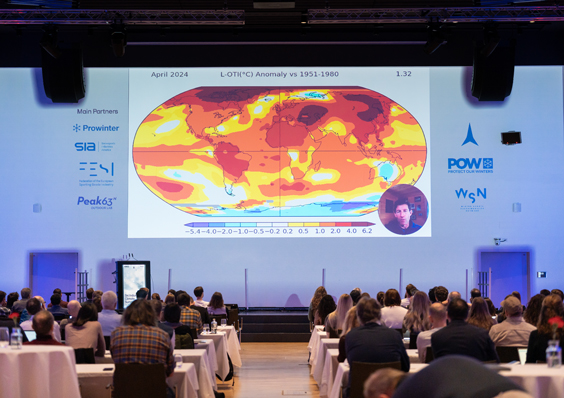
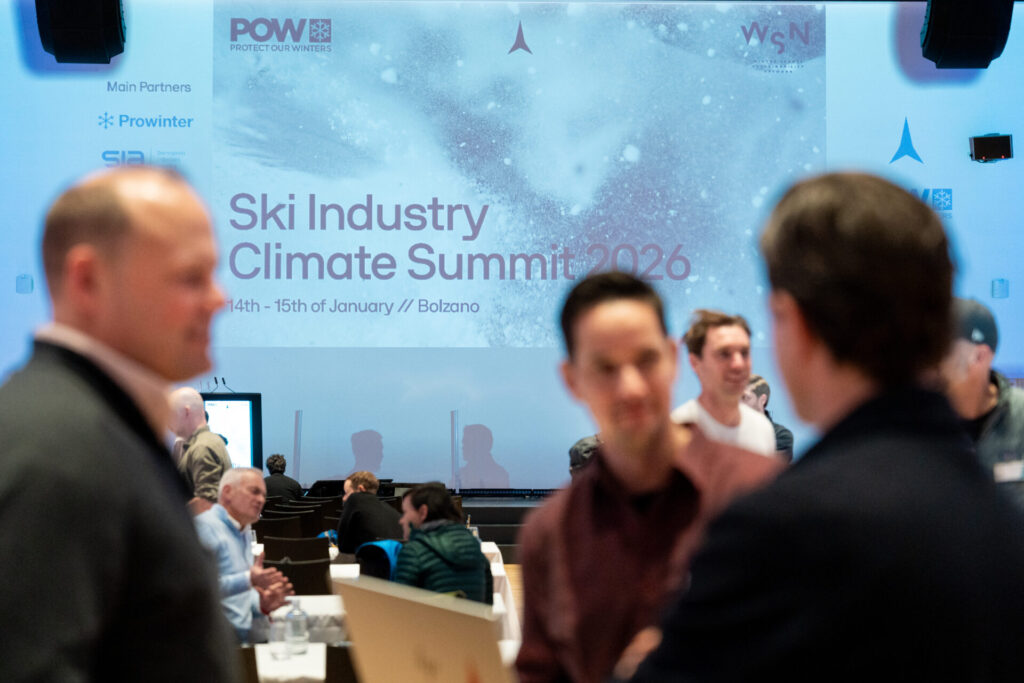
Held over two days, the summit convened representatives from brands, resorts, federations, retailers, and other parts of the winter sports ecosystem. Discussions focused on how organizations are assessing climate impacts and responding within their respective areas of influence.
Participants shared perspectives on how climate-related changes are already affecting winter sports operations. Several sessions addressed the need for coordinated approaches across the industry, reflecting an increased emphasis on collaboration.
Keynote and industry perspectives
A keynote presentation by Auden Schendler, author and long-time climate advocate in the ski industry, addressed the role of communication and public engagement. Schendler discussed how everyday interactions within winter sports, including resort operations and guest experiences, can shape broader understanding of climate issues.
Schendler emphasized the cultural and recreational value of skiing and outdoor activity, noting that these experiences are central to why climate-related efforts resonate within the winter sports community.
Research findings from a Decathlon study were also presented, outlining the company’s assessment of skiing-related impacts and its long-term outlook toward 2050. The presentation highlighted cooperation across land management, transportation, and mobility as recurring challenges that extend beyond individual organizations.
Resort operations and long-term planning
Representatives from Compagnie des Alpes, including Frederic Marion, general manager, and Jerome Decisier, marketing and commercial director, discussed operational realities for ski resorts under changing climate conditions. They referenced internal projections indicating potential reductions in skiable terrain over time.
The speakers outlined long-term planning efforts focused on employment, community stability, and continued access to mountain environments. Their remarks centered on adaptation strategies rather than short-term operational adjustments.
Federations and governance
In a session titled FIS – Our Journey from the First Impact Programme, Susanna Sieff, sustainability director at the International Ski and Snowboard Federation (FIS), described how federations influence athletes, clubs, and competitions.
Sieff explained that FIS’s approach extends beyond emissions measurement to include education initiatives and engagement with younger participants. She described this as part of a broader effort to integrate climate considerations into governance and development structures.
Ben Aidan, partnership director, addressed the role of advocacy within organizations. He noted that while operational changes can reduce direct impacts, organizations may also influence broader systems through communication, internal training, and public engagement.
From discussion to implementation
The second day of the summit shifted focus toward implementation, with parallel sessions dedicated to products and federations. The federation track included contributions from Romain Riboud of the French Ski Federation, Marlen Marconi of Swiss-Ski, and Fabrice Perrin of UTMB Group.
Additional analysis was presented by You. Smart. Thing. on travel and event-related mobility. In a workshop organized with the Sustainable Mountain Alliance, participants examined how transportation contributes to the overall footprint of large ski events. According to the discussion, travel can account for a majority of event-related impacts.
Workshop participants mapped emissions hotspots across different event phases and discussed potential responses based on feasibility and scale.
Ongoing collaboration
Across keynote sessions, workshops, and informal discussions, a recurring theme was the role of cooperation across the ski industry. Participants represented scientific institutions, NGOs, resorts, brands, retailers, and governing bodies.
The summit concluded with an emphasis on continued coordination beyond the event itself, positioning the gathering as part of an ongoing process rather than a final outcome.
The organizers acknowledged the support of Atomic and the Winter Sports Sustainability Network for co-organizing the summit, as well as Fiera Bolzano – Messe Bozen for hosting the event.
This article was first published by Protect Our Winters Europe.
Images: © Marco Parisi / Atomic