


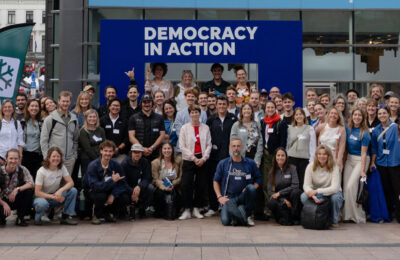
The Outdoor Impact Summit was the key sustainability event for the European outdoor industry in spring 2025. Over two days, nearly 200 industry experts gathered to listen to talks, exchange ideas, and network. Gabriel Arthur from Suston and NORR Agency, along with Anna Rodewald and Cira Riedel from GreenroomVoice, kick-started the event with what could well become a standard for outdoor conferences: heading into nature to talk about sustainability – together.
“Hike & Talk: Exploring the future of sustainability communication.” This was the invitation to our three-hour hike, which included a coffee break and lunch at an outdoor restaurant. Fifty participants, including representatives from brands, suppliers, retailers, journalists, and communication specialists, had signed up. Fully booked!
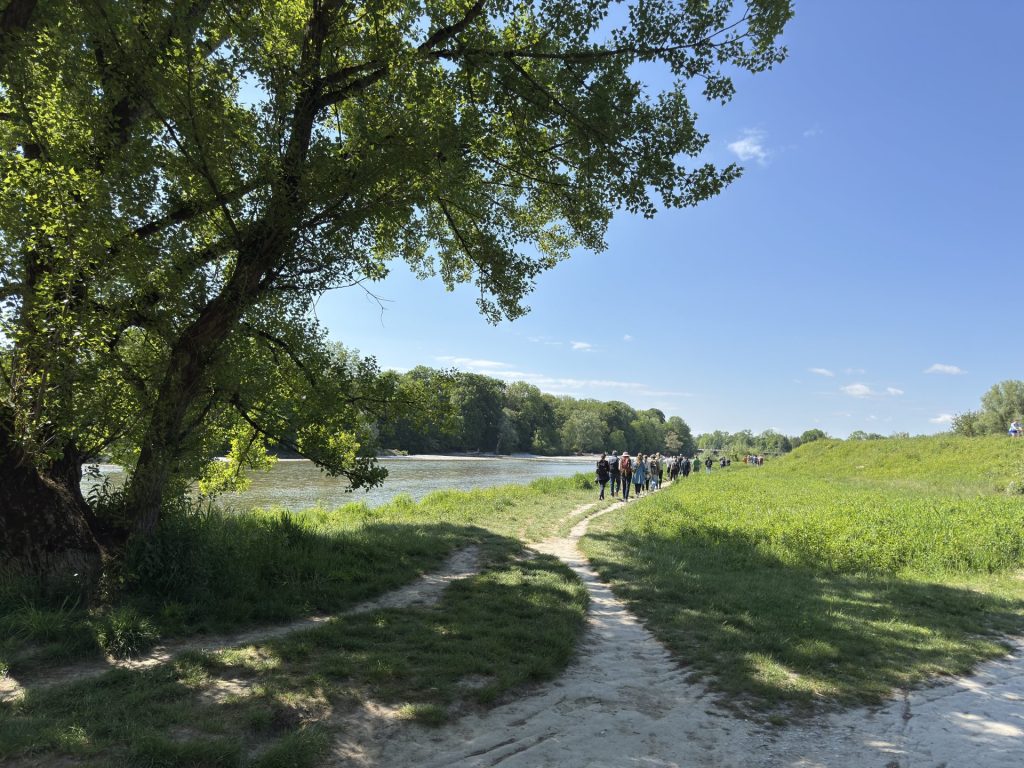
We hiked southwest – in the direction of the Alps – seeking fresh perspective on the three themes. As soon as we stepped off the asphalt and into the leafy forest trails along the Isar River, conversations began to flow.
The Isar is Munich’s green lung, running through the city from south to north. A meandering system of trails, bridges, and car-free roads makes this river corridor a haven for peaceful exploration.
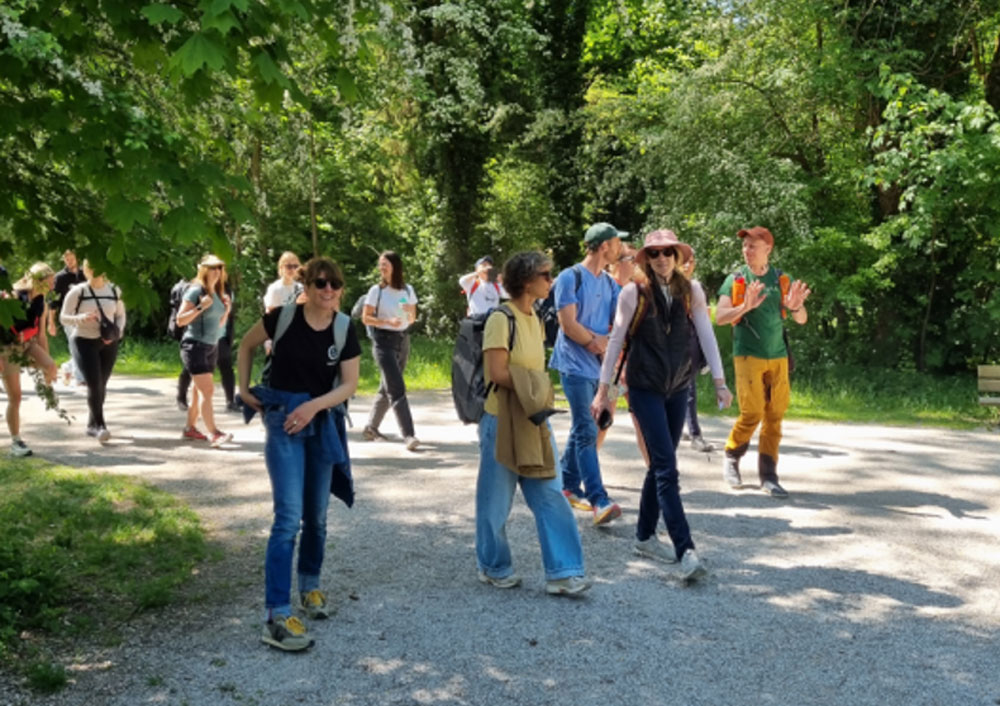
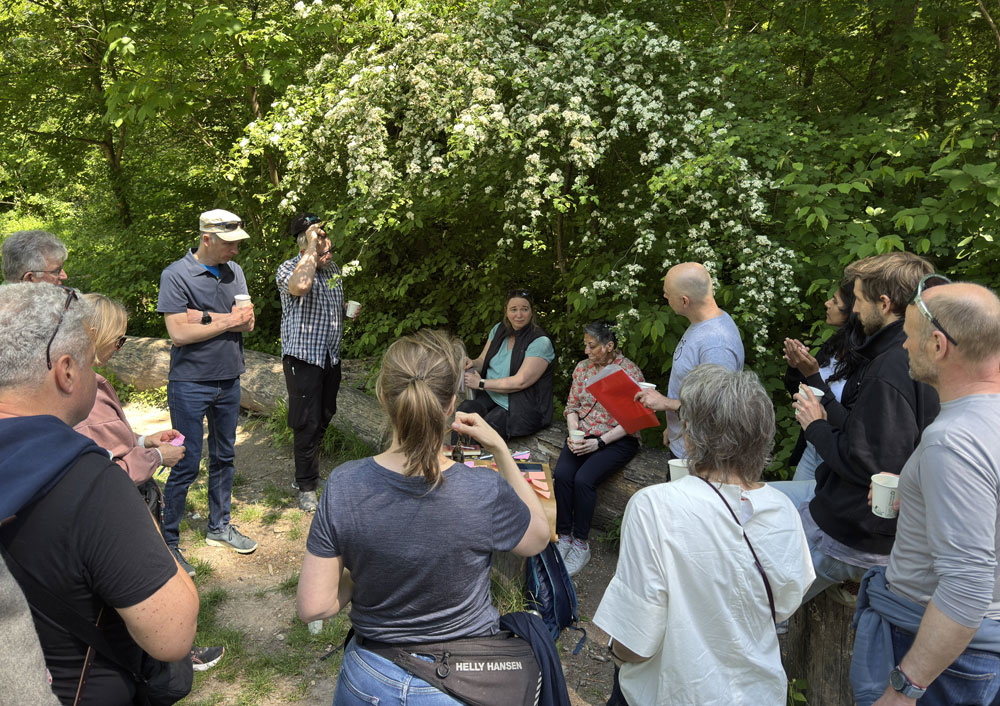
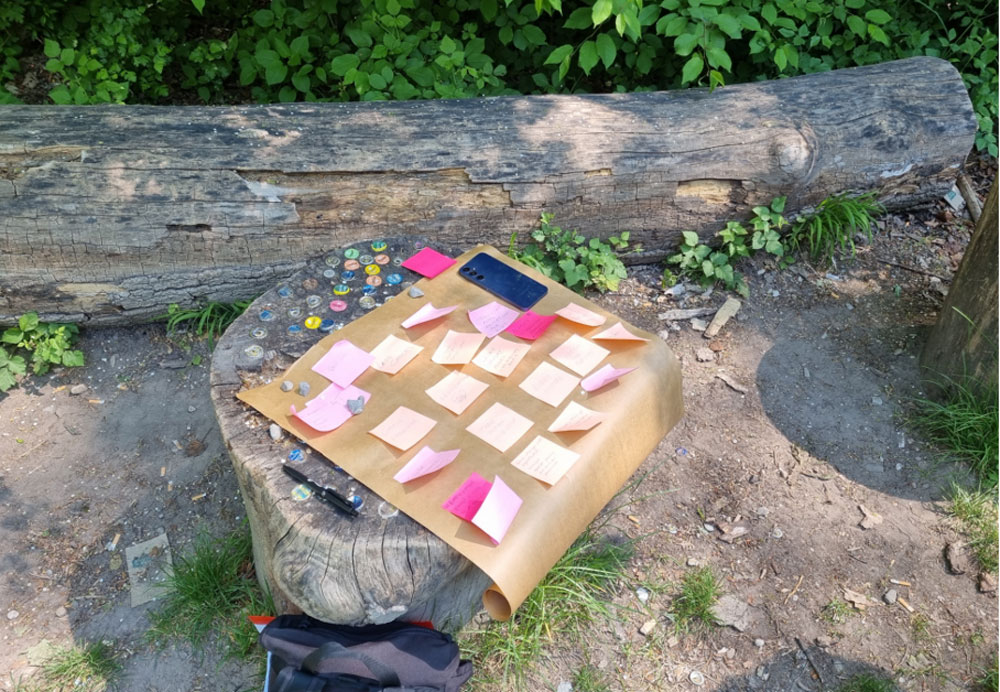
The participants divided into three groups, each focusing on a specific topic. There was brainstorming, idea-sharing—and plenty of engagement.
Our groups naturally split into smaller sub-teams. After about an hour, we paused to exchange key insights. And then another stage, and another break.
Afterwards, we returned to the city carrying ideas shaped by the outdoors. As professionals working in sustainability journalism and communication, we were energized by the participants’ openness and insights. We highly recommend this co-lab format for any group of professionals seeking to bring fresh oxygen into their discussions.
Here are our key takeaways from the three topics explored during the Hike & Talk along the Isar River at Outdoor Impact Summit 2025.
Theme 1: Under pressure – communicating sustainability in a changing world
By Gabriel Arthur, Suston Magazine & NORR Agency
There’s no shortage of great sustainability communication – as long as you’re speaking to the already convinced. But as the sustainability transition comes under increasing pressure, the real challenge is to engage broader and more diverse audiences. How do we reach outside “the bubble”?
Such resistance doesn’t only come from far-right politicians or climate change deniers. It can be more complex – and something our participants said they struggle with in their daily work. How do you address a colleague who is happy about his weekend heli-skiing trip? Should you mention the C-word? Or what do you say to a CEO who demands double-digit growth over the next few years, and at the same time has signed commitments about Science Based Targets?
And then there’s the issue of communicating your brand and products. If you come from a pioneering company in sustainability – how do you convince customers who just don’t care that this is important? Among many great ideas and insights, three aspects stood out.
Define stakeholders and personas
Who are you talking to? The “sustainability crew” is a homogeneous group in terms of education, values, etc. But people are different! In traditional marketing, there are well-established methods to cluster personalities based on their interests and values. The same thinking can be useful when you have important sustainability messages to spread. If you’re going to explain the company’s climate strategy to the board, start by getting to know them. What drives them? What are their long-term perspectives for the company? What would make them listen – or zoom out?
Avoid defence mechanisms
Often when we talk about communication, we actually mean “one-way communication.” Experts transmit messages to receivers. This form of communication can often make the receiving side feel guilty, stupid, or excluded. And then defense mechanisms kick in. “Who are you to tell me what to do?” “I’m just an individual; this is a global problem.” What could the reactions be if the receiver were included in the discussion—and truly listened to? Perhaps even the experts could learn something from the non-experts?
Keep it simple – and playful
If you want to reach outside “the sustainability bubble,” you might need to change your tone of voice. Since the EU Green Claims Directive started to gain traction, much sustainability communication has become super correct—and nearly impossible to understand for outsiders. Especially if they’re not already interested. But complex issues don’t need to be explained in complex ways. Just think about how good schoolbooks explain everything from democracy to the laws of gravitation in ways most kids can understand.
Theme 2: Future-proof your story – sustainability messaging for the coming years
By Cira Riedel, Greenroom Voice
With communication soon to be tightly regulated under the EU’s Green Claims Directive, it’s time to take a deep and honest look at how we speak to our fellow citizens. Communication has long served as a tool for marketing and consumption—but the rules are shifting, and rightly so. Brands still want to tell compelling stories about why their products matter. The question is: how do we balance storytelling, marketing, legislation, fairness, and even education?
Consumers “vote” with their wallets every day, but producers and communicators have a duty to ensure those choices are informed, fair, and future-focused. In tomorrow’s communication landscape, success will come from systems that are both honest and human.
Why we must evolve our communication
It starts with early education and continues through myth-busting, empathetic messaging, and stakeholder engagement. We need to meet people where they are—whether overwhelmed, skeptical, or unaware—and offer clarity without blame. Nature is not a luxury; it’s a right—and a responsibility. Making that connection accessible and meaningful is key.
What to prioritize
We must focus on inclusive, targeted communication that reflects diverse needs and emotional states. Tap into what motivates people: community pride, playful competition, gamification, and personal relevance. Communication should foster a sense of belonging, making sustainability not only understandable but aspirational.
How to do it right
Start from within—internal communication forms the foundation of authentic external messaging. Build a systemic strategy. Choose your channels wisely, report transparently, and make sustainable choices easy to understand and act on. Provide incentives—financial, social, emotional—rather than burdens. Most importantly, collaborate across the outdoor industry to speak with a unified, credible voice.
Theme 3: Listen and spread the messages from the wild
By Anna Rodewald, Greenroom Voice
The outdoor industry often speaks of its deep connection to nature—but how can we ensure that this goes beyond a tagline? Exploring meaningful and responsible ways of engaging with nature is essential to building authentic and credible communication.
What can we learn from the wild that’s worth passing on?
In an age where every word is scrutinized—by law, by public opinion, and by the planet—it’s tempting to focus only on what we say. But great communication starts with listening. To each other, yes—but also to the systems we’re part of. To our surroundings. To the wild.
If we want to live in balance with nature, mimicking its principles isn’t just poetic—it’s practical. Nature has spent billions of years refining systems that waste nothing, adapt continuously, and thrive in balance. There’s no branding in the forest, yet everything has a role, a rhythm, and a reason.
We are nature
Nature creates no waste. It evolves through imperfection, flourishes in cycles, and respects its limits. These aren’t metaphors—they’re models. Embedding this thinking into how we communicate, design, and act can help us build resilient systems for the future.
Start early with education
From forest kindergartens to school farms, hands-on exposure to the natural world teaches children resilience, adaptability, and respect for ecological limits. When kids learn to “like the situation”—or gilla läget, as the Swedes say—they begin to understand seasonality and the value of what’s locally available. These are not just life skills—they’re strategies for the future.
Learn from nature
In the workplace, outdoor experiences such as walking meetings or mountain offices don’t just support well-being – they often lead to clearer thinking and more grounded decisions. Observing biodiversity and engaging with wild landscapes can trigger a kind of systemic intelligence that inspires innovation far beyond the boardroom.
The future of communication isn’t about being louder—it’s about being more aware. We don’t just need to grab attention; we need to understand the context we’re speaking into. Nature teaches us to grow through adaptation, not force. That means communicating with honesty, flexibility, and respect—not only for our message, but also for its timing and relevance.
Photos: Pete Webb, Pipeline Digital








Sorry, the comment form is closed at this time.