November 13, 2025 The good and the bad in Patagonia’s new impact report
Patagonia has released its first comprehensive impact report since shifting to a business structure where “the planet is our only shareholder.” The document offers a candid look at how the outdoor company is progressing — and where it’s falling short — in addressing climate and ecological breakdown.
Fifty-two years after its founding and three years since changing its ownership structure, Patagonia is releasing a report disclosing the company’s progress toward using business to implement solutions to the climate and ecological crisis.
The “Work in Progress” report provides the most comprehensive view of the Ventura-based outdoor apparel company’s business impact, ownership structure and environmental giving that it has ever released. Intended as a spin on an impact report, as company employees began creating the document a year ago, it became clear the report would need to balance data and metrics with narrative storytelling for context. The name of the report refers to the notion that Patagonia sees itself as an experiment in doing business differently, or a work in progress.
Balancing achievements with accountability
“We want to show our employees, customers and community where we are doing well, and where we have work to do,” said Corley Kenna, chief impact and communications officer at Patagonia.
“We are not perfect, as this report will show, but we remain steadfastly committed to improving all parts of our business, from making the highest quality products to supporting our employees and community of activists and ambassadors. This report is a transparency tool, not a victory lap.”
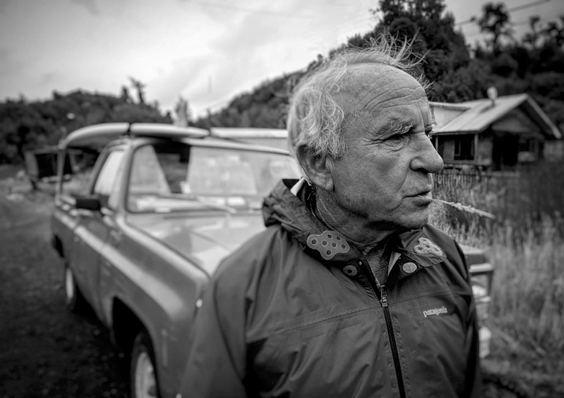
In September 2022, Patagonia announced founder Yvon Chouinard and his family had transferred ownership of the company to the Holdfast Collective and the Patagonia Purpose Trust. The ownership structure allows the company to indefinitely remain bound to its purpose of saving the home planet. Patagonia’s excess profits — the money left over after reinvesting into the business — are distributed to Holdfast Collective, a collection of nonprofits that use the money to protect nature and biodiversity.
First unified impact disclosure
As a privately held company, annual stakeholder reporting has never been required of Patagonia. Over the years, the company has shared its efforts, both the successes and the shortcomings, via Our Footprint on patagonia.com, B Corp assessments and other tools. Until now, however, this reporting has been disjointed.
“With this first Work in Progress report, we’re bringing it all together,” Kenna said.
“Our goal is for our community to read this report and engage in constructive dialogue that can lead to better outcomes for people and the planet.”
Scope of reporting and key focus areas
The report spans Fiscal Year 2025, from May 1, 2024, to April 30, 2025, with some instances of older data to provide context. Key subjects include:
Developments since Patagonia changed its ownership structure in 2022
How $180 million in funding from the Holdfast Collective has supported land and water conservation
Four decades of giving through its 1% for the Planet commitment
Ongoing efforts – and limitations – in cleaning up the global supply chain
Read Patagonia’s Work in Progress Report.
About Patagonia
Patagonia is a U.S.-based outdoor apparel company founded in 1973 by Yvon Chouinard. It is known for combining product quality with environmental advocacy. As a certified B Corporation and member of 1% for the Planet, Patagonia has donated more than $240 million to environmental causes. Its ownership structure prioritizes the planet as its sole shareholder, with profits not reinvested into the business distributed to environmental initiatives.
Lead image: Patagonia founder Yvon Chouinard (Credit: Jimmy Chin)