


For the entrepreneur Jeffrey Provencal, ”one person’s trash is another person’s treasure” is more than just a cliché – it’s a sustainable business opportunity.
“I was born in Switzerland to Ghanaian parents. I recall my trips to Ghana growing up, where I would wonder how Switzerland could be so clean and Ghana not,” says Jeffrey Provencal over the phone from the scorching heat of Ghana’s capitol Accra.
This question persisted and, years later, his BA bachelor’s thesis would evolve into a business plan that he realized might actually work.
“I figured all that remained was to either shut up about it, or get out there and see how far I could get.”
The goal was to create an environmentally, socially and financially sustainable enterprise that also tackled Ghana’s rampant PET waste problem.
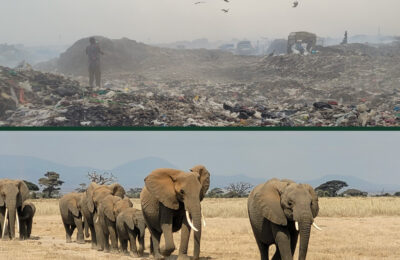
“People here have traditionally used banana leaves as packaging that could be discarded on the ground after use – now they treat plastic the same way, only PET bottles take 450 years to disintegrate.”
Plastic Waste Problem Equals Opportunity
From the ivory tower of the University of Applied Science in Zurich to the waste heaps of Accra, Jeffrey Provencal faced a steep learning curve.
“I started out in the open air next to the landfill, collecting the bottles myself.”
He then enlisted a group of savvy migrants whose livelihoods were already based on scouring the landfills.
“Their expertise and efficiency proved invaluable to the project’s success, and they in turn gained health care and social security benefits as employees.”
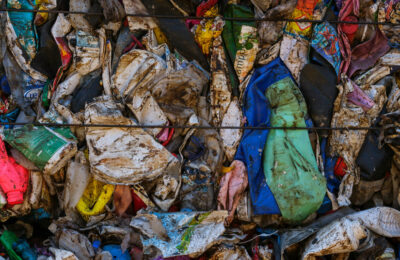
After the PET bottles are collected, they are then sorted and machined into flakes. The flakes in turn are transported to a European client, who then reprocesses the flakes into pellets that are re-integrated into the production cycle.
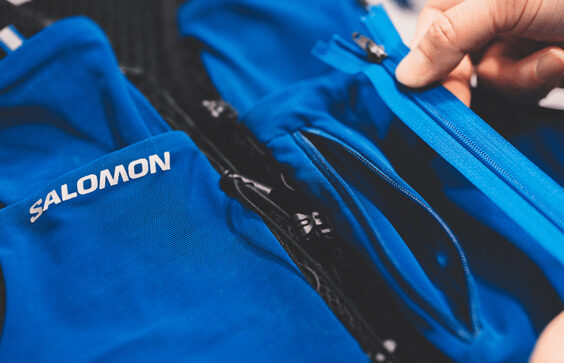
“I take every opportunity to promote PET waste as something with value. I am a walking model of recycled PET bottles – my shorts, my backpack – people freak out when I explain to them that the soccer jerseys they’re wearing are made of polyester, which is just another word for PET.”


Two years in and Jeffrey Provencal’s startup company Repatrn is preparing to move from the pilot phase and into production – from 20 tonnes PET to 800 tonnes. That’s roughly 63 million bottles out of the landfill and back into the circular economy. Per month.
“The dream is to scale up production until we can supply all of Ghana’s domestic PET pellet demand locally. This could then create an entire ecosystem with the subsequent manufacturing into textiles, new bottles etc.”
“This certainly has had its challenges. But between this and a regular desk job, there’s no question where I’d rather be!”






Sorry, the comment form is closed at this time.