November 5, 2021 New Textile Prize Goes to “Rental-Only” Designer
Next Textile introduces an international award with the ambition to become the textile industry’s equivalent of the Polar Music Prize – the Fabric of Life Award.
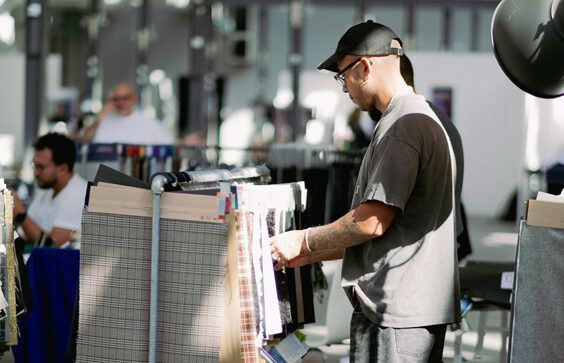
On October 12, the annual Next Textile event took place in Borås, Sweden, reaching out to the worlds of outdoor, sports and fashion. New this year was the introduction of the Fabric of Life Award, and the first winner of the prize came from fashion – though certainly not from ”fast fashion.”
The Fabric of Life Award was awarded to the young designer Louise Xin from Stockholm. In November, Louise Xin launched the first rental-only, non-sales Couture brand in Scandinavia – and the world. Focusing on working with as many upcycled fabrics as possible, Louise has also been passionate about human rights since she began working within the field and believes that you can’t discuss sustainability if garments are made under poor working conditions.
Outdoor and fashion side-by-side

Charles Ross
Borås is the heart of Sweden’s textiles industry, with a history reaching back to the start of the 1800s. Sweden’s leading textiles educational institution is found here as well as a large cluster of outdoor, sports and fashion companies. Since 2014, the annual Next Textile event has also taken place here, with the goal of gathering all parts of the textiles sector around important strategic future considerations. Initially a Swedish event, it is now held in English and employs a ”hybrid format” with hundreds of in-person attendees as well as a live-stream. The event can also be said to have been a hybrid in another sense, having gathered sustainability presenters from the outdoor industry with their counterparts in the fashion world.
At this year’s event, one of the presenters was Elaine Gardiner, sustainability manager at Haglöfs. She shared about the brand’s climate strategy, which following a comprehensive analysis will have a major focus on the factories and upstream production in the supply chain. Jo Dawson from HD Wool Apparel Insulation spoke on how sheep care – and thus wool production – can be redirected to become regenerative. The moderator was Charles Ross, a well-known name in the European outdoor sustainability scene.
”Some important take-aways from my perspective were the needs to focus on climate footprints of Tier 3 in the supply chain, as Elaine Gardiner pointed out. Also, just like Merino revitalized itself at the turn of the Millennium, wool is making a comeback,” shares Charles Ross, who continues:
”We need to remember the amazing power that fashion has to inspire and make people optimistic: all summed up by Louise Xin. She is a living proof that excellence starts in a corner and spreads.”

Photos: Next Textile